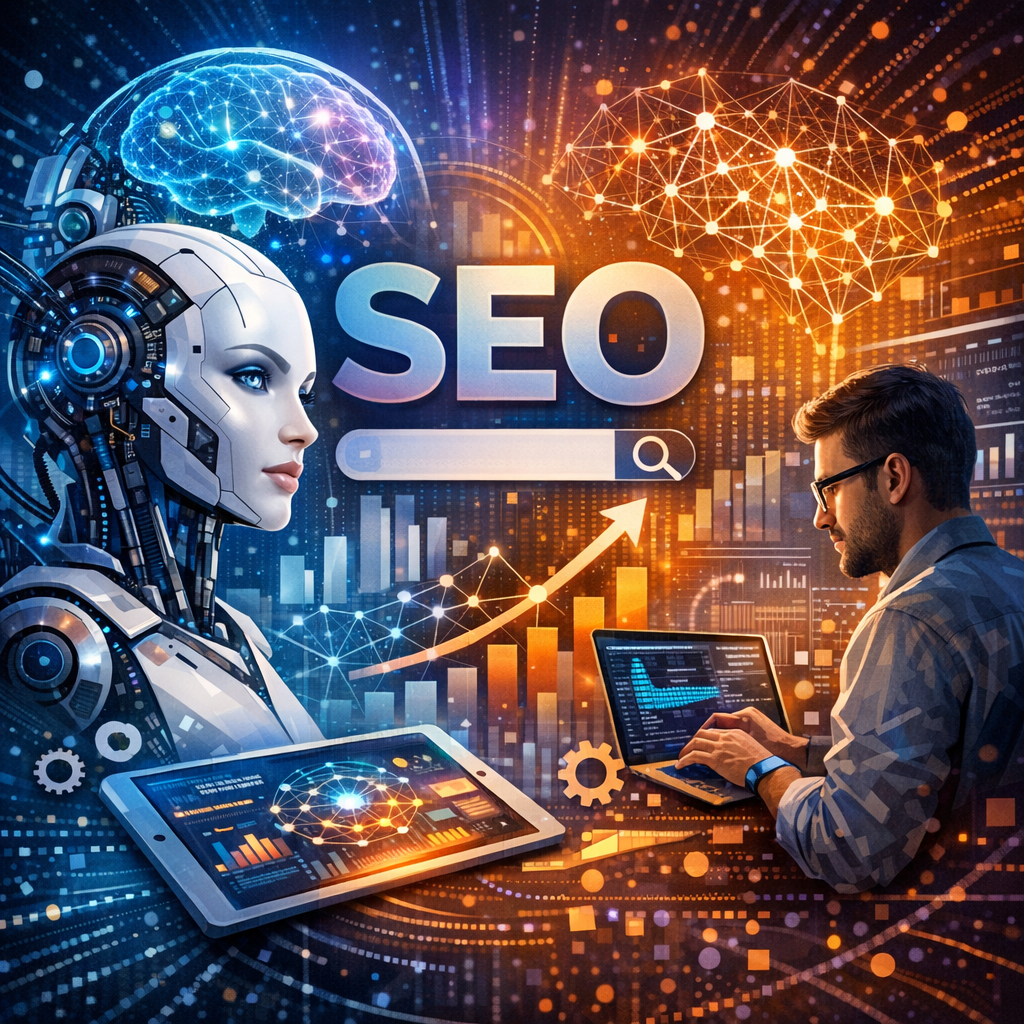
Harnessing AI for SEO: Transforming Strategies for C-Suite Executives
Introduction
In the rapidly evolving digital landscape, staying ahead of the curve is crucial for businesses aiming to optimize their online presence. Search Engine Optimization (SEO) remains a cornerstone of digital marketing strategies. As companies strive to rank higher in search results, the integration of Artificial Intelligence (AI) has emerged as a game-changer. AI’s ability to analyze vast amounts of data at unprecedented speeds offers a transformative edge in the SEO realm. For C-suite marketing and SEO professionals, understanding and leveraging AI-driven SEO strategies can significantly enhance their digital marketing efforts and maximize ROI.
AI technologies are redefining how search engines rank content, transforming traditional practices and introducing new approaches that can be daunting yet rewarding. From AI-driven keyword research tools that predict search trends to advanced algorithms capable of understanding natural language better than ever before, the potential for AI in SEO is vast and promises innovation beyond conventional methods.
For instance, AI tools like Google’s RankBrain and BERT have revolutionized the search engine landscape by employing machine learning to deliver more relevant results based on user intent rather than mere keyword matching. This shift requires marketers to pivot towards more nuanced content strategies that focus on user experience and satisfaction. As AI continues to advance, professionals must adopt a forward-thinking approach, harnessing AI to not only align with current search engine criteria but to anticipate future trends and user needs.
AI isn’t just a back-end phenomenon; it’s instrumental in front-end personalization too. By analyzing user behavior and preferences, AI can help tailor content to individual experiences, thereby improving engagement and conversion rates. In essence, AI enables a more dynamic, responsive SEO strategy that can keep pace with the continually shifting digital environment. For executives, this means fostering a strategic culture that values agility, data-driven decision-making, and a willingness to embrace technology that may redefine industry standards.
Features
The integration of AI in SEO is not just a theoretical discussion but a practical enhancement supported by diverse studies across professional and medical landscapes. A study published by the Journal of Medical Internet Research explored the impact of AI on optimizing healthcare websites for search engines, demonstrating significant improvements in retrieve rates and user engagement through AI-driven content adjustments and personalization.
Moreover, comprehensive research conducted by industry leader SEMrush highlights AI’s role in transforming keyword strategy. By analyzing vast amounts of user data and search patterns, AI tools can predict trending keywords with better accuracy, allowing marketers to stay ahead of the competition and adjust their strategies in real-time.
The concept of AI-driven content optimization extends beyond keyword analysis. Research by the Content Marketing Institute shows that AI can enhance content creation by generating topic suggestions, adjusting content structure for increased readability, and even improving multimedia integration, thus boosting both engagement and search ranking.
AI’s ability to process and analyze massive datasets also proves invaluable in technical SEO elements like site audits and competitive analysis. By utilizing AI-based tools, such as Moz and Ahrefs, marketers can identify technical issues, pinpoint opportunities for improvement, and develop more efficient backlink strategies.
Notably, AI’s influence reaches into personalized marketing strategies. According to a Salesforce report, AI-driven personalization in marketing increases customer satisfaction by delivering highly targeted content, improving user experience, and consequently enhancing SEO performance.
These studies underscore AI’s multifaceted role in evolving SEO strategies, offering professionals tools to enhance content relevance, technical precision, and user personalization.
Conclusion
The integration of AI into SEO strategies heralds a new era for digital marketing, marked by enhanced efficiency, precision, and user-centric approaches. As AI technology continues to evolve, so must the strategies employed by C-suite executives to ensure their companies remain competitive in the digital space. Embracing AI’s capabilities will not only redefine SEO strategies but strengthen overall digital presence, driving sustained business growth.
References
– JMIR: The Impact of AI on Optimizing Healthcare Websites
– SEMrush: AI’s Role in Keyword Strategy
– Content Marketing Institute: AI in Content Optimization
– Moz: AI in Technical SEO
– Salesforce: AI-driven Personalization in Marketing
Concise Summary
The integration of AI in SEO is transforming digital marketing by enhancing efficiency and precision. AI’s ability to analyze vast data quickly allows businesses to optimize content based on user intent rather than just keyword matching. This transformation requires marketers to adapt, focusing on user experience and personalization to boost engagement and conversion rates. The use of AI in SEO includes tools like Google’s RankBrain and BERT, improving content relevance and search engine rankings. As AI evolves, C-suite executives must keep pace, leveraging AI-driven strategies to remain competitive and drive growth.

Dominic E. is a passionate filmmaker navigating the exciting intersection of art and science. By day, he delves into the complexities of the human body as a full-time medical writer, meticulously translating intricate medical concepts into accessible and engaging narratives. By night, he explores the boundless realm of cinematic storytelling, crafting narratives that evoke emotion and challenge perspectives.
Film Student and Full-time Medical Writer for ContentVendor.com