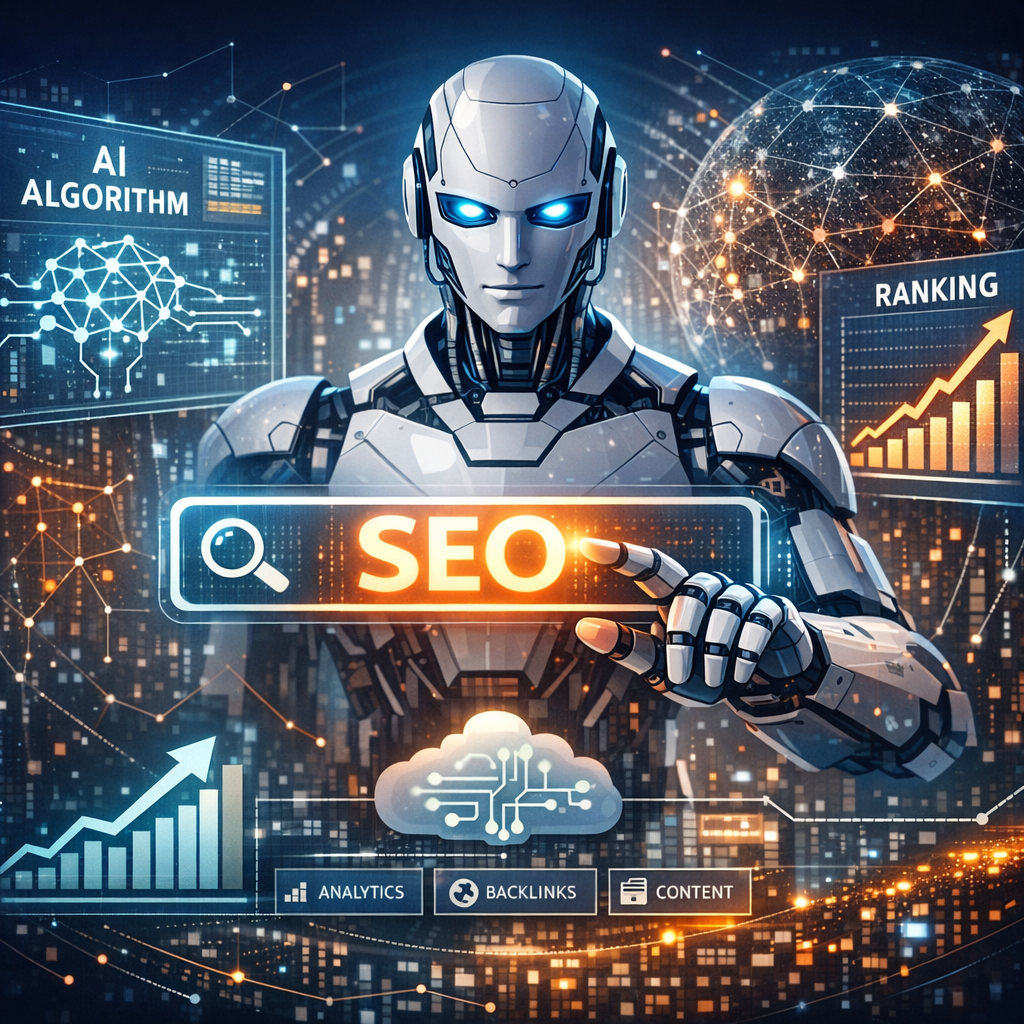
The Future of SEO: Integrating AI for Enhanced Website Performance
Introduction
The digital landscape is continually evolving, and with it, the strategies businesses employ to enhance their online visibility. For C-suite marketing and SEO professionals, staying ahead of the curve is crucial. As search engines become more sophisticated, incorporating artificial intelligence (AI) into SEO strategies is no longer optional but necessary. AI offers unprecedented opportunities to optimize content, improve user experience, and ultimately drive more conversions. Understanding how AI can be effectively integrated into SEO efforts is critical for maintaining competitive advantage in today’s fast-paced digital world.
AI is revolutionizing traditional SEO practices by providing deeper insights into consumer behavior, predicting trends, and automating content creation and analysis. For instance, Google’s AI-driven algorithm, RankBrain, plays a pivotal role in processing search queries and understanding user intent. With machine learning capabilities, AI tools can analyze vast amounts of data to identify patterns and preferences that human analysts might overlook. This enables marketers to create highly targeted content that resonates with their audience, leading to improved engagement metrics.
Moreover, AI can drastically improve keyword research, a fundamental aspect of SEO. Traditional methods of keyword analysis are time-consuming and often lack precision. AI-powered tools can process large datasets quickly, identifying high-value keywords and predicting keyword trends with accuracy. This not only saves time but also ensures that content is aligned with what users are actively searching for, thus boosting organic traffic. AI’s impact is also seen in content personalization. By analyzing user data and behavior, AI can tailor content to individual users, enhancing their site experience and increasing dwell time.
However, AI’s benefits extend beyond content optimization. By leveraging AI-driven analytics, businesses can gain real-time insights into website performance, user engagement, and conversion rates. These insights enable data-driven decision-making, ensuring that SEO strategies are adapted in response to current performance metrics. For C-suite executives, AI integration translates into a more efficient allocation of marketing resources and improved ROI. As we look to the future, embracing AI in SEO is not just about keeping up with trends; it is about shaping the future of digital marketing.
Features
Several professional studies underscore the transformative impact of AI on SEO and digital marketing. A study by McKinsey & Company highlighted that companies using AI in marketing and sales have seen a 20% increase in overall revenue. This underscores AI’s potential to drive profitability through enhanced SEO practices and personalized marketing efforts. The study also emphasized the importance of data-driven decision-making, a process significantly streamlined by AI’s ability to process and analyze data rapidly.
In the realm of content personalization, a report by Accenture showed that 91% of consumers are more likely to shop with brands that provide relevant offers and recommendations. AI tools that personalize content based on user data can thus significantly enhance user engagement and conversion rates, making them invaluable in a competitive market landscape. By tailoring content to meet individual preferences, brands can foster a deeper connection with their audience, ultimately boosting customer loyalty and lifetime value.
From a technical perspective, a comprehensive study by Adobe found that 47% of digitally mature organizations have a defined AI strategy, compared to only 3% of organizations in the early stages of AI implementation. This discrepancy illustrates the competitive advantage that AI provides in digital marketing and SEO. AI’s ability to automate repetitive tasks such as SEO audits, content analysis, and performance reporting allows marketing teams to focus on strategic initiatives that drive growth.
Similarly, a research article published in the Journal of Marketing outlined the effectiveness of AI in improving customer journey mapping and experience. The study demonstrated that AI-driven insights into consumer behavior and preferences facilitated the creation of seamless, personalized customer journeys, which in turn elevated brand perception and engagement. The implications for SEO are profound, as AI facilitates a better understanding of user intent and behavior, allowing for more precise targeting and content strategy refinement.
In conclusion, integrating AI into SEO strategies offers a multitude of benefits, from enhanced content optimization and personalized user experiences to real-time data insights that drive informed decision-making. As AI technology continues to advance, its role in transforming SEO practices is likely to grow, providing forward-thinking businesses with the tools they need to thrive in the digital landscape.
Conclusion
The integration of AI into SEO represents a paradigm shift in digital marketing, providing C-suite professionals with the tools to enhance website performance and drive growth. By leveraging AI for analytics, personalization, and automation, businesses can stay ahead of trends and meet the ever-evolving expectations of digital consumers. As AI continues to evolve, its potential to reshape SEO strategies offers an exciting opportunity for marketers willing to embrace innovation and drive future success.
References
1. [McKinsey & Company: How Artificial Intelligence Will Transform the Marketing Mix](https://www.mckinsey.com/business-functions/marketing-and-sales/our-insights/how-artificial-intelligence-will-transform-the-marketing-mix)
2. [Accenture: The Key to Unlocking Success – Personalization](https://www.accenture.com/us-en/insights/interactive/personalization-key-unlocking-list)
3. [Adobe: 2018 Digital Trends: Artificial Intelligence in Digital Marketing](https://www.adobe.com/content/dam/cc/en/experience-cloud/digital-insights/digital-trends-2018-artificial-intelligence.pdf)
4. [Journal of Marketing: Artificial Intelligence in Marketing, Customer Experience, and Sales](http://journals.ama.org/doi/abs/10.1509/jm.15.0420)
Concise Summary
The integration of AI into SEO represents a fundamental change in digital marketing strategy. By providing deeper consumer insights, personalization, and automation, AI tools enhance content optimization and drive conversions, offering competitive advantage. Professional studies support that AI implementation increases both revenue and engagement by aligning content with user preferences. Therefore, incorporating AI in SEO is not merely about following trends, but about shaping the future of digital marketing for superior ROI and customer experience.

Dominic E. is a passionate filmmaker navigating the exciting intersection of art and science. By day, he delves into the complexities of the human body as a full-time medical writer, meticulously translating intricate medical concepts into accessible and engaging narratives. By night, he explores the boundless realm of cinematic storytelling, crafting narratives that evoke emotion and challenge perspectives.
Film Student and Full-time Medical Writer for ContentVendor.com