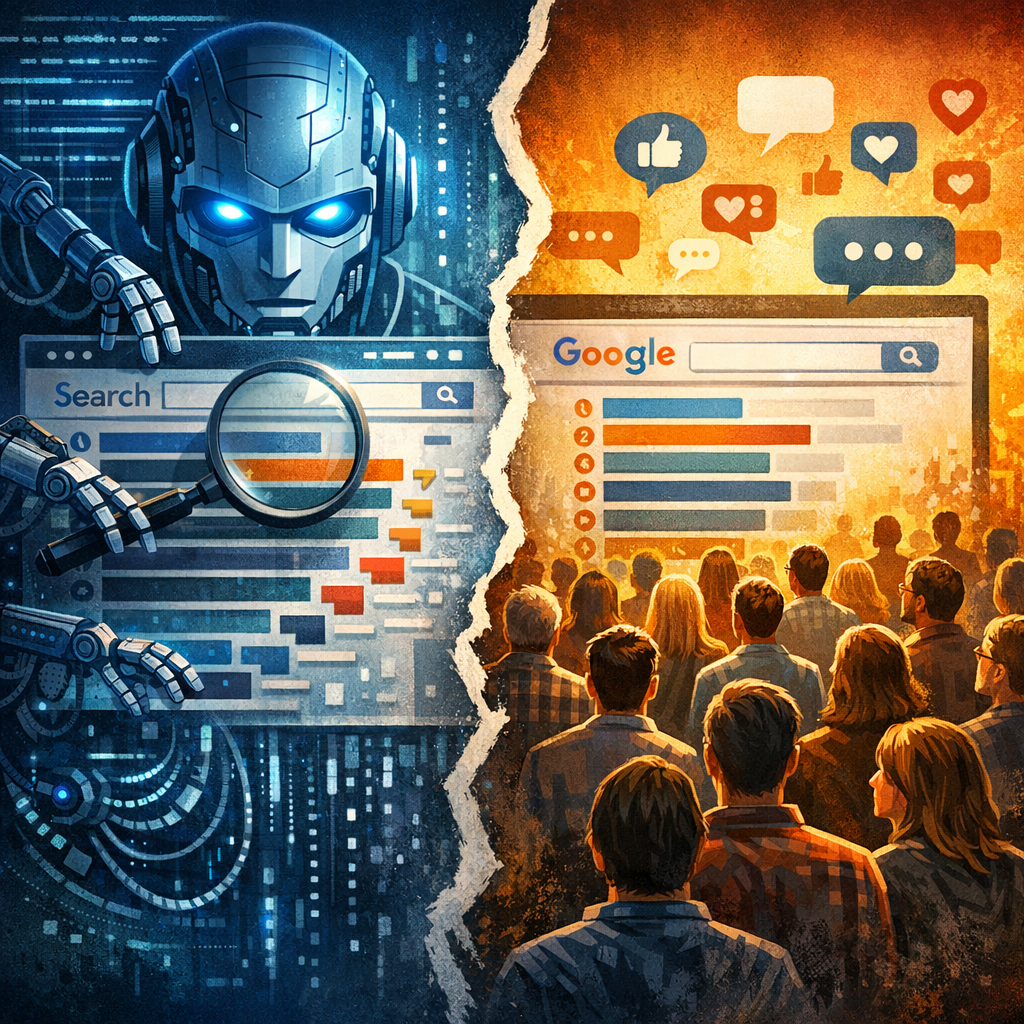
The Evolving Role of AI in Shaping SEO Strategies: A Deep Dive
In the rapidly evolving digital landscape, where data-driven strategies determine market leaders, incorporating artificial intelligence (AI) into search engine optimization (SEO) practices has become indispensable for staying competitive. As digital touchpoints multiply and consumer behaviors become more intricate, AI’s role in deciphering massive datasets to facilitate precise, predictive, and personalized marketing strategies cannot be overstated. For C-suite marketing and SEO professionals, the integration of AI into SEO not only represents a technological upgrade but also a strategic necessity to align with futuristic digital trends.
Over the past few years, AI has transformed from a buzzword into a vital tool that redefines how marketers approach SEO. Traditional methods, which relied heavily on keyword densities and backlink volumes, are giving way to more sophisticated models powered by machine learning algorithms. These AI-driven models automatically analyze and predict search trends, comprehend user intent more accurately, and deliver more personalized content recommendations, making the SEO process more efficient and effective.
The introduction of AI in SEO offers an enhanced understanding of user experience (UX), one of the pillars of effective digital marketing. AI tools can analyze website traffic patterns and behaviors in real-time, identifying friction points and suggesting improvements that can improve engagement and conversions. Furthermore, AI enhances voice search capabilities, adapting content to meet the growing demand for voice-activated searches on devices like smartphones and smart speakers.
As Google’s algorithms become more intelligent, incorporating natural language processing (NLP) and deep learning, SEO strategies need to evolve accordingly. Google’s BERT (Bidirectional Encoder Representations from Transformers) update, for instance, uses AI to better understand the context of words in search queries, thus putting more emphasis on creating contextually rich and helpful content over keyword-stuffing tactics of the past.
In light of these advancements, businesses that want to stay at the forefront must invest in AI technologies to achieve the full spectrum of SEO benefits. This progressive approach not only optimizes search rankings but also aligns with the broader business objectives of enhancing customer engagement and fostering brand loyalty.
Features of AI-Driven SEO in Professional Practices
Several studies and professional analyses underscore the transformative impact of AI on SEO methodologies. For instance, a 2021 study published in the [International Journal of Information Management](https://ijim.org/how-artificial-intelligence-is-transforming-digital-marketing/) highlights how AI technologies significantly improve the precision of keyword analysis and the predictability of search engine algorithms, leading to more refined content strategies. AI technology, through machine learning, offers a competitive edge as it continuously learns from new data, adjusting strategies in real time to reflect changes in user behavior and algorithmic updates.
Furthermore, a report from [McKinsey & Company](https://www.mckinsey.com/business-functions/mckinsey-digital/our-insights/the-state-of-ai-in-2021) emphasizes AI’s capacity for large-scale data processing and pattern recognition, which allows it to extract actionable insights from disparate data sources quickly. As SEO complexity increases, AI provides tools such as predictive analytics to forecast changes in search engine algorithms, enabling marketers to react preemptively rather than retroactively.
AI’s role in enhancing UX through personalization features is corroborated by research highlighted in the [Journal of the Academy of Marketing Science](https://journals.sagepub.com/doi/abs/10.1007/s11747-020-00799-6). The study reports that AI-driven personalization efforts can increase conversion rates by up to 20% by delivering precisely tailored content and recommendations to users based on their past behaviors and preferences.
In the medical field, AI has been instrumental in facilitating more targeted content delivery for healthcare information, as noted by an article in the [Journal of Medical Internet Research](https://www.jmir.org/2021/4/e23243/). This precision ensures that users receive the most relevant and reliable health-related information, thereby enhancing trust and engagement.
Overall, these studies and professional insights highlight the indispensable role of AI in shaping the future of SEO strategies. Professionals and businesses that adapt to these advancements will not only maintain their competitive edge but also pioneer new standards of digital marketing excellence.
Conclusion
Incorporating AI into SEO strategies is no longer optional for businesses aiming for top search rankings and sustained digital growth. The compelling capabilities of AI to analyze, adapt, and personalize marketing content promise unprecedented optimization of user experience and business outcomes. C-suite marketing and SEO professionals must embrace these technological advancements, committing to continuous learning and adaptation to succeed in the ever-evolving digital marketplace.
Concise Summary:
AI’s integration into SEO is crucial in today’s digital landscape, offering data-driven insights and strategies for user experience optimization. AI enhances keyword analysis, predicts trends, and personalizes content, elevating search rankings and engagement. Studies confirm AI’s impact on digital strategy, urging businesses to invest in these technologies for competitive digital growth.

Dominic E. is a passionate filmmaker navigating the exciting intersection of art and science. By day, he delves into the complexities of the human body as a full-time medical writer, meticulously translating intricate medical concepts into accessible and engaging narratives. By night, he explores the boundless realm of cinematic storytelling, crafting narratives that evoke emotion and challenge perspectives.
Film Student and Full-time Medical Writer for ContentVendor.com