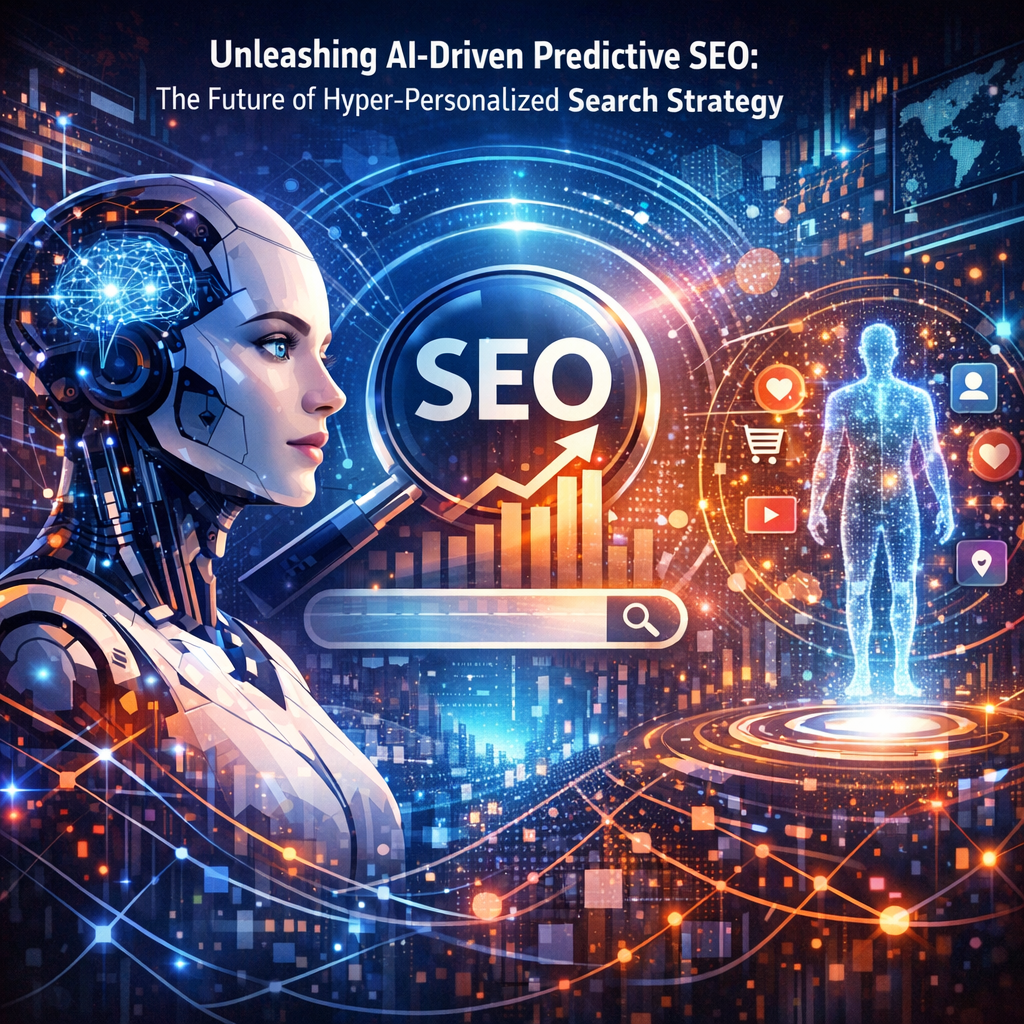
Harnessing AI in SEO: Transforming Strategies for C-Suite Professionals
Introduction:
In the rapidly evolving digital landscape, C-suite marketing and SEO professionals are under continuous pressure to stay ahead of the competition by adopting cutting-edge technologies. Artificial Intelligence (AI) is not just a buzzword but a transformative tool reshaping how strategies are designed and implemented. Its integration into SEO practices is not only enhancing efficiency but also significantly impacting how brands engage with their audiences. Understanding AI’s role in SEO is crucial for executive decision-makers who are steering their organizations toward digital excellence.
The sophistication of AI tools today extends beyond simple automation; they are instrumental in unraveling complex data sets to provide actionable insights. AI is revolutionizing the way data is processed, allowing SEO professionals to predict trends, optimize content, and personalize user experiences. With Google’s ever-evolving algorithms, incorporating AI into SEO strategy isn’t just advantageous—it’s imperative. Google’s RankBrain, an AI-based algorithm, demonstrates AI’s critical role in understanding search queries and indexing web pages more effectively. AI tools like these offer predictive analytics, automate A/B testing, and refine keyword research, reducing the margin of error in strategic decisions.
Furthermore, AI-driven content creation tools are streamlining workflows, helping create optimized, engaging content rapidly and cost-effectively. These tools use natural language processing (NLP) to comprehend search intent, enabling marketers to enhance content relevance and improve rankings. AI’s impact stretches beyond technical SEO, influencing user experience (UX) by personalizing interactions, which drives engagement and boosts conversion rates. As C-suite executives consider allocating resources, understanding the multifaceted role of AI in SEO becomes vital to align organizational goals with emerging digital trends.
AI not only streamlines technical aspects but also strategically enriches how organizations can engage with their audiences, enhance customer satisfaction, and achieve higher conversion rates. As organizations integrate AI within their SEO strategies, professionals can explore expansive opportunities in creating hyper-personalized marketing efforts, using sophisticated algorithms to match the swift changes in digital trends.
Features:
Research and professional studies underline the efficacy of AI in enhancing SEO strategies. A study published in the [Journal of Business Research](https://www.journals.elsevier.com/journal-of-business-research) highlights how AI is pivotal in customer sentiment analysis, which can significantly tweak marketing strategies to better resonate with target audiences. AI tools analyze patterns in data, giving companies an edge in understanding consumer behavior and optimizing content to meet user expectations more accurately.
Another survey from [Econsultancy](https://econsultancy.com/) points out that nearly 60% of marketers believe AI will transform the nature of digital marketing, with a specific focus on content creation and personalization. This highlights AI’s potential to personalize marketing efforts at scale, improving the precision of targeted campaigns and customer interactions. Implementing AI in SEO enables the processing of vast amounts of data quickly, offering insights that manual processes simply cannot match.
Medical studies on AI have far-reaching applications as well. According to research by the [Harvard Business Review](https://hbr.org/), AI’s machine learning algorithms are being used in medical imaging to enhance diagnostic accuracy. The principles underlying these capabilities—pattern recognition and predictive analytics—are equally applicable in SEO. They can enhance keyword strategy, optimize ad targeting, and predict search trends with a high degree of accuracy, offering competitive advantages in creating effective marketing campaigns.
By using AI tools like chatbots, brands personalize customer interactions, increasing satisfaction and loyalty. A study by [MIT Technology Review Insights](https://www.technologyreview.com/) reveals that AI personalization can lead to a 20% boost in sales opportunities, illustrating how AI’s predictive capabilities can refine SEO strategies. These insights show that AI does not merely automate processes but adds strategic value by providing deeper, actionable insights into SEO and marketing strategies—a true game-changer for C-suite professionals.
Conclusion:
AI represents a paradigm shift in SEO strategy for C-suite professionals eager to leverage the technology’s full potential. Its ability to process vast amounts of information, deliver insights, and enhance personalization efforts makes it an indispensable tool in today’s digital marketing landscape. By embracing AI, executives not only future-proof their strategies but also drive innovative growth and maintain competitive advantage.
Concise Summary
AI is transforming SEO strategies by enabling C-suite professionals to stay competitive in the digital landscape through enhanced data processing, trend prediction, and user personalization. This technology is vital in optimizing content for search relevance, improving user experience, and increasing engagement rates. AI’s role extends beyond automation to provide strategic insights, allowing for hyper-personalized marketing efforts that meet evolving consumer expectations. By integrating AI, businesses benefit from precise SEO strategies that secure growth, innovation, and a sustainable competitive edge.

Dominic E. is a passionate filmmaker navigating the exciting intersection of art and science. By day, he delves into the complexities of the human body as a full-time medical writer, meticulously translating intricate medical concepts into accessible and engaging narratives. By night, he explores the boundless realm of cinematic storytelling, crafting narratives that evoke emotion and challenge perspectives.
Film Student and Full-time Medical Writer for ContentVendor.com