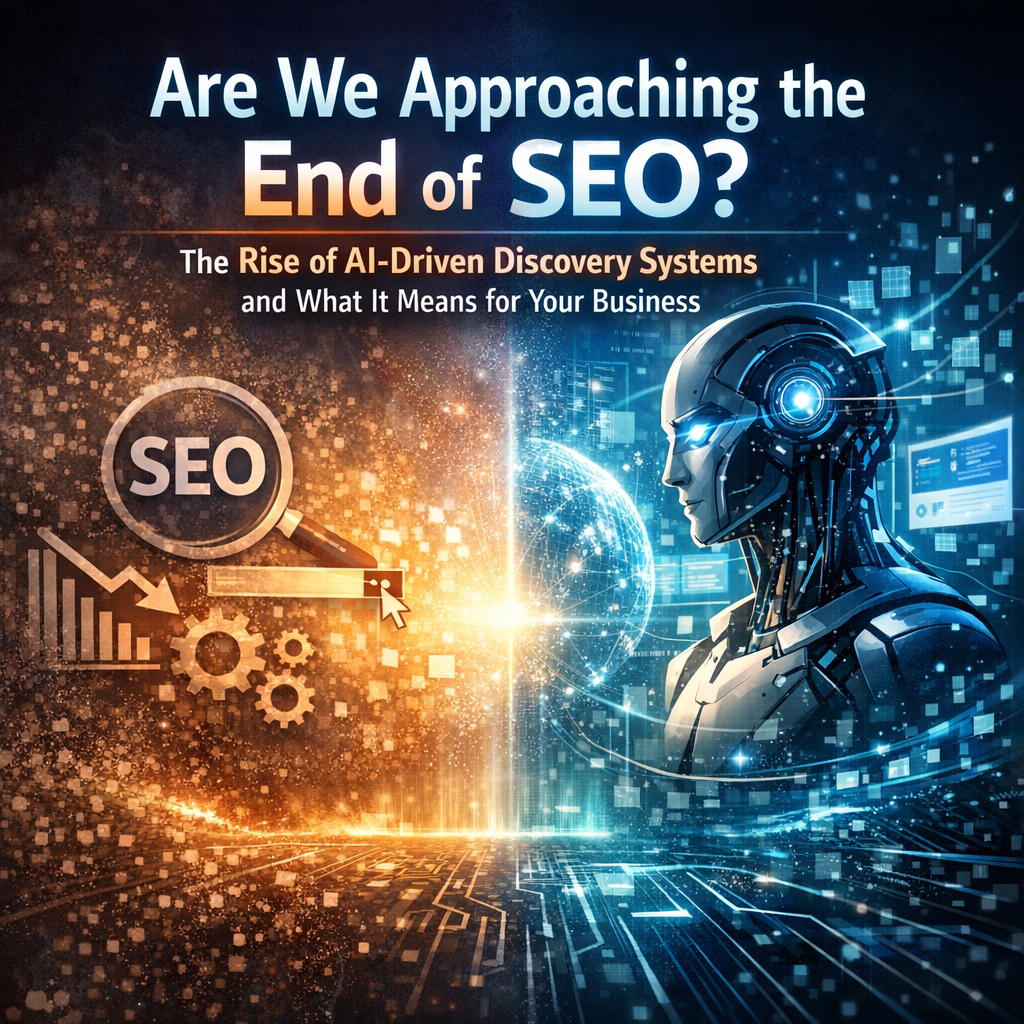
The Future of SEO: AI-Driven Strategies for Competitive Edge
Introduction
In the rapidly changing world of digital marketing, maintaining a competitive edge requires more than just traditional strategies. Enter AI-driven SEO—a new frontier redefining how brands connect with online audiences. For top-level marketing and SEO professionals, understanding and harnessing AI technology is transformational, offering unprecedented opportunities to boost visibility, drive traffic, and increase revenues.
AI-driven SEO involves integrating artificial intelligence technologies into search engine optimization practices. This includes using machine learning algorithms, natural language processing, and data analytics to automate and optimize SEO tasks. AI-driven SEO’s main goal is to analyze, predict, and respond to the ever-evolving search engine algorithms and user behavior.
AI’s potential in SEO is substantial. By making SEO strategies more data-driven, businesses can deeply understand user intent. This enhances the ability to create hyper-personalized content that resonates with target audiences. Furthermore, AI can automate tedious tasks like keyword research, site audits, and competitor analysis, allowing teams to focus on strategic initiatives.
Advanced AI models, such as Google’s BERT and OpenAI’s GPT series, are already impacting how search engines understand language. These models improve search engines’ ability to grasp context, sentiment, and nuances in user queries, resulting in more relevant search results. For marketers, this means optimizing content not just for keywords, but for context and conversational nuances.
As consumer expectations rise, so does the need for instantaneous, accurate, and personalized solutions, and AI-driven SEO is at the forefront of meeting this demand. Businesses that effectively leverage AI will lead in digital excellence, establishing themselves as pioneers in their industries.
Features
Numerous professional and academic studies highlight AI’s transformative potential in SEO. For example, a study by [Forrester](https://go.forrester.com/research/) reveals that businesses using AI technologies in their marketing strategies can achieve up to a 30% increase in conversion rates. AI’s ability to handle large datasets allows marketers to identify patterns and make proactive adjustments, supporting a more agile approach to SEO.
Research from [McKinsey](https://www.mckinsey.com/business-functions/mckinsey-digital/our-insights) indicates that 50% of companies using AI in marketing report improved decision-making and customer targeting. This success is due to AI’s capability to analyze customer behavior and precisely segment audiences, enhancing targeting strategies.
In content creation, a study published in the [Journal of Business Research](https://www.journals.elsevier.com/journal-of-business-research) found that AI-driven content personalization can boost engagement by 25%. Tools like automated content generation and analysis help marketers maintain a consistent brand voice while scaling content across platforms. AI aids in identifying trends and predicting consumer preferences, ensuring content is highly relevant. Moreover, using AI to evaluate content performance allows for quick adjustments, refining strategies in real-time.
AI also facilitates advances in technical SEO. Automating site audits allows SEO professionals to promptly identify and rectify issues like broken links or poor mobile performance. A study in the [Journal of Information Technology Management](https://link.springer.com/journal/10799) observed that technical optimization tasks performed by AI reduced human error by 70%, leading to more efficient website management. This automation also enables continuous monitoring, ensuring websites remain optimized and compliant with search engine guidelines.
These studies underscore that integrating AI into SEO practices not only streamlines processes but also enhances overall outcomes—positioning companies ahead of competitors in the digital space.
Conclusion
Introducing AI into SEO strategies is not just a trend but a necessity for businesses seeking a competitive edge in the digital domain. As AI technology continues to evolve, its capabilities will expand, offering more sophisticated and effective audience engagement strategies. Organizations that adopt and adapt to AI technologies will not only thrive but lead the way in the next era of digital marketing.
References
– Forrester Research: [Forrester](https://go.forrester.com/research/)
– McKinsey Insights: [McKinsey](https://www.mckinsey.com/business-functions/mckinsey-digital/our-insights)
– Journal of Business Research: [Elsevier](https://www.journals.elsevier.com/journal-of-business-research)
– Journal of Information Technology Management: [Springer](https://link.springer.com/journal/10799)
Concise Summary
Integrating AI-driven SEO into digital marketing is crucial for staying competitive. AI technologies like natural language processing and machine learning allow for more precise, data-driven strategies, boosting visibility and engagement. Studies reveal AI can improve conversion rates, decision-making, and content personalization. AI models such as Google’s BERT enhance understanding of context, refining SEO practices. Automating tasks like site audits reduces errors, increasing efficiency. As AI evolves, businesses leveraging these tools will pioneer future digital marketing strategies.

Dominic E. is a passionate filmmaker navigating the exciting intersection of art and science. By day, he delves into the complexities of the human body as a full-time medical writer, meticulously translating intricate medical concepts into accessible and engaging narratives. By night, he explores the boundless realm of cinematic storytelling, crafting narratives that evoke emotion and challenge perspectives.
Film Student and Full-time Medical Writer for ContentVendor.com