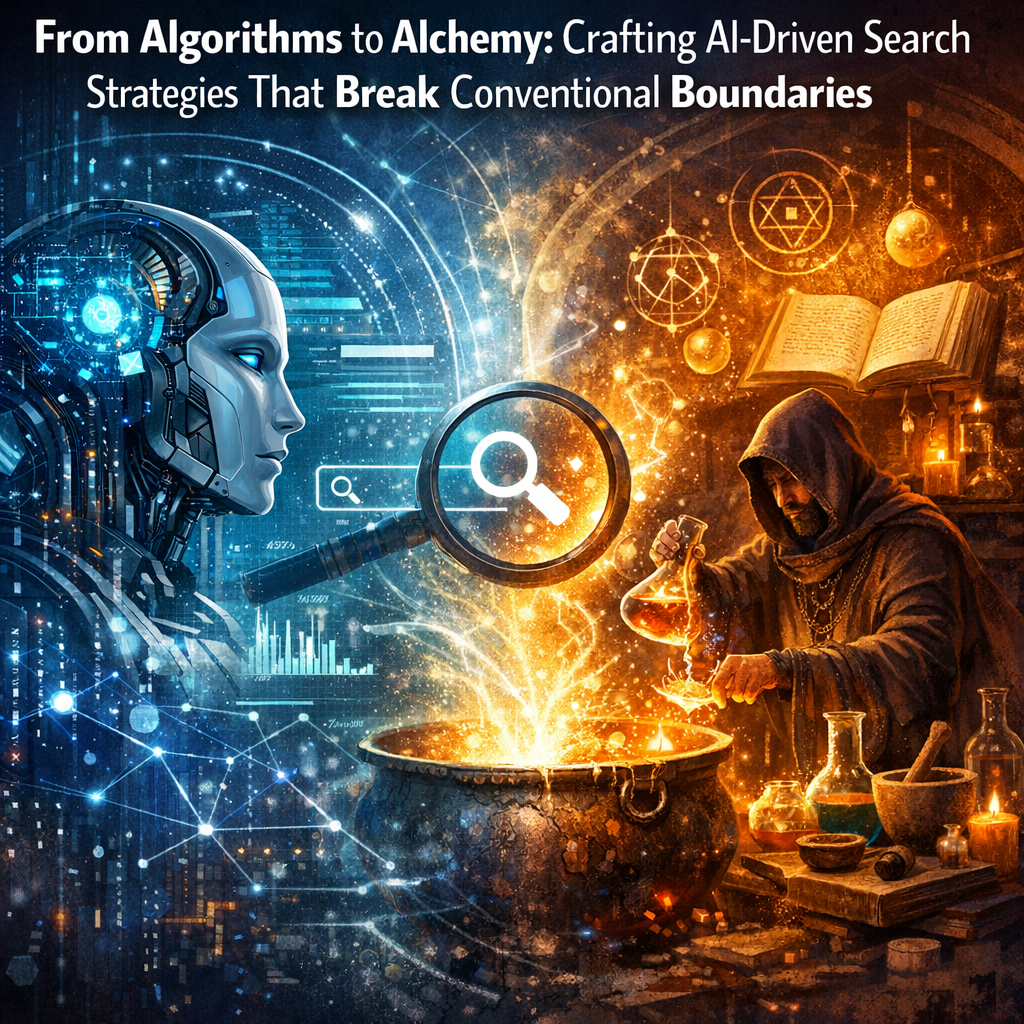
The Future of SEO: How Artificial Intelligence is Reshaping Search Marketing
Introduction
In an era increasingly dominated by digital interactions, the power of artificial intelligence (AI) is revolutionizing the landscape of search engine optimization (SEO). For C-suite marketing and SEO professionals, understanding the integration of AI in SEO strategies is crucial to maintaining a competitive edge. SEO, traditionally rooted in understanding algorithms and optimizing content accordingly, is experiencing a transformation as AI technologies become more advanced and accessible.
AI has already proven its potential to enhance the efficiency and effectiveness of search marketing in various ways. From personalizing search results to automating routine optimization tasks, AI introduces a new dynamic to the industry that allows for deeper insights and more precise targeting. For instance, Google’s AI-driven algorithm, RankBrain, has been a game-changer in understanding query intent, enabling more accurate search results. RankBrain uses machine learning to process unfamiliar queries and recognize patterns, reflecting a significant departure from the static keyword-focused approaches of the past.
Moreover, AI has paved the way for enhanced voice search capabilities, reflective of the growing consumer preference for hands-free technology. As devices like Amazon’s Alexa and Google’s Assistant become commonplace, optimizing for voice search using AI tools ensures marketing strategies remain relevant. Reports indicate that by 2024, as much as half of all online searches are expected to be conducted via voice. In this context, integrating AI into SEO strategies is more of a necessity than an option for organizations aiming to capture this burgeoning market segment.
Furthermore, AI’s role in data analytics cannot be understated. With an overwhelming amount of data generated every second, AI tools are indispensable in deciphering trends, analyzing user behavior, and providing actionable insights. These insights not only drive intelligent marketing strategies but also improve customer engagement by delivering personalized experiences. The rapid evolution of AI technology brings with it new possibilities and challenges, necessitating that today’s SEO professionals remain informed and agile to leverage these tools effectively.
Features
Recent studies and professional analyses provide insights into the transformative impact of AI on SEO. According to a 2021 report by McKinsey & Company, businesses using advanced AI analytics reported profit margins that were up to 7% higher than their peers not utilizing AI in similar capacities [Link](https://www.mckinsey.com/industries/advanced-electronics/our-insights/the-age-of-analytics-competing-in-a-data-driven-world). This indicates not only the efficiency gain AI brings but also its potential to drive profitability in the marketing sector. With AI’s capabilities in sifting through vast datasets and automating processes, SEO professionals can redirect their focus towards strategic initiatives and creative pursuits.
In the realm of medical studies, AI’s potential is evident in various applications beyond SEO, underscoring the versatility and reliability of AI technologies. A study conducted by Stanford University highlighted AI’s capacity in diagnosing skin cancer at levels comparable to board-certified dermatologists [Link](https://stanfordmedicine.app.box.com/v/DeepDermisonline). Although this directly pertains to healthcare, it illustrates AI’s proficiency in analyzing complex data accurately, translating into broader implications for fields like SEO where big data analysis is paramount.
Furthermore, a research paper by MIT Sloan explored how algorithms powered by AI are providing new data-driven insights in consumer behavior [Link](https://sloanreview.mit.edu/article/how-ai-is-transforming-the-organization/). When applied to SEO, this capability allows marketers to craft data-informed strategies that foster higher engagement and conversion rates. By analyzing patterns in user searches, AI enables marketers to predict trends and adjust content strategies quickly—effectively capitalizing on emerging opportunities faster than ever before.
AI’s integration into SEO strategies doesn’t merely stop at data analysis and personalization. Tools like ChatGPT and Jasper AI can assist in generating SEO-friendly content efficiently, providing a foundation upon which marketers can build creative and personalized content without compromising quality. Such advancements underscore the paradigm shift in content creation, making high-quality, optimized content more accessible.
Conclusion
The integration of artificial intelligence into SEO represents a dynamic frontier for digital marketing professionals. Its ability to personalize experiences, streamline data analysis, and predict market trends makes it an essential tool in shaping effective SEO strategies. As AI technologies continue to evolve, those who adapt and leverage these tools strategically will find themselves at the forefront of search marketing innovation, driving results and gaining measurable advantages in the digital space.
Concise Summary
Artificial intelligence is reshaping SEO by enhancing personalization, streamlining data analysis, and optimizing voice search capabilities. AI tools like RankBrain, ChatGPT, and others enable marketers to efficiently automate routines, analyze complex data, and create SEO-friendly content. Integrating AI leads to improved accuracy in search results, heightened customer engagement, and the ability to adapt to emerging trends swiftly. As AI continues evolving, businesses that strategically incorporate these technologies into their SEO strategies are likely to achieve superior marketing outcomes and remain competitive.

Dominic E. is a passionate filmmaker navigating the exciting intersection of art and science. By day, he delves into the complexities of the human body as a full-time medical writer, meticulously translating intricate medical concepts into accessible and engaging narratives. By night, he explores the boundless realm of cinematic storytelling, crafting narratives that evoke emotion and challenge perspectives.
Film Student and Full-time Medical Writer for ContentVendor.com