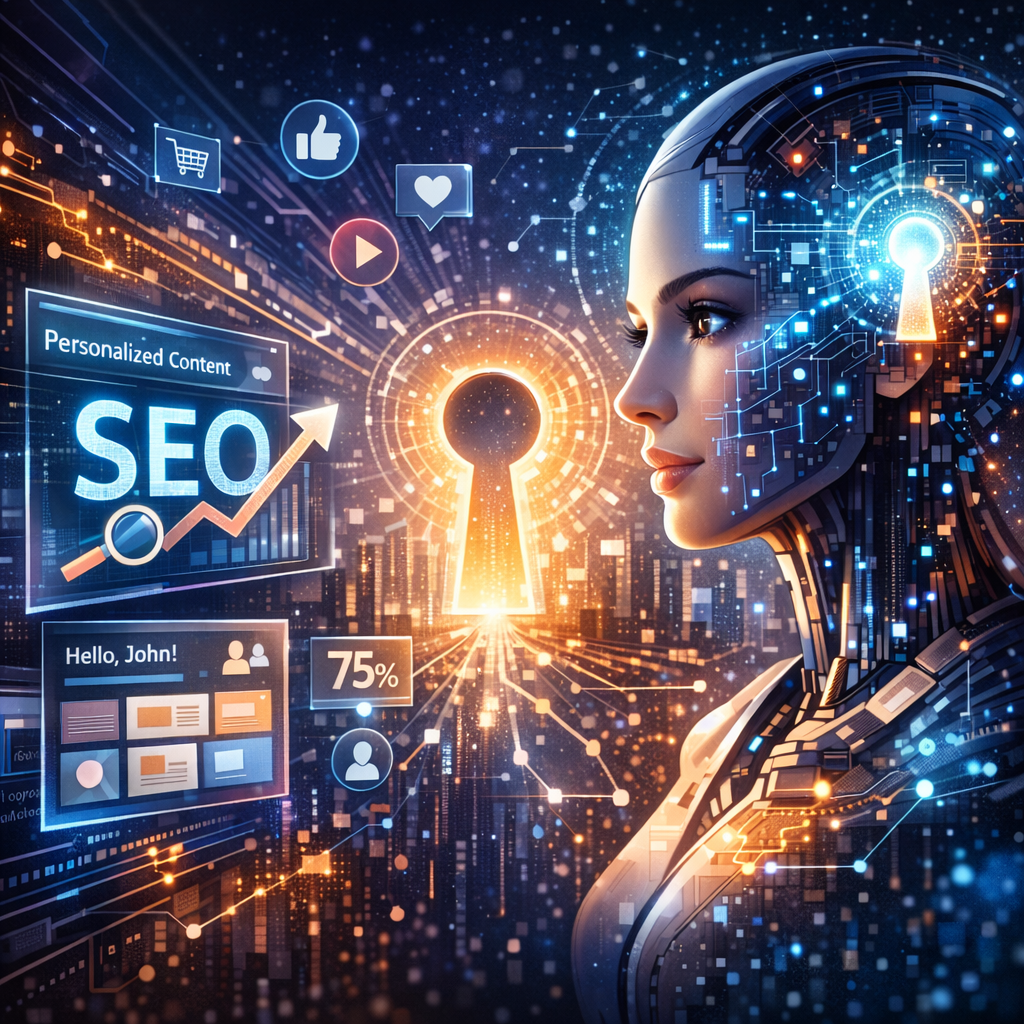
Navigating the Future of SEO: Harnessing AI for Unprecedented Growth
Introduction
In the ever-evolving digital landscape, SEO stands as a cornerstone for companies striving to enhance their online presence. For C-suite marketing and SEO professionals, the integration of artificial intelligence (AI) into SEO strategies offers unprecedented opportunities for growth. The intersection of AI and SEO is transforming how businesses approach search engine optimization, providing more accurate insights, improved strategies, and enhanced user experiences.
AI technologies have permeated various facets of digital marketing, automating data analysis, keyword research, and content personalization. For SEO professionals, leveraging AI means more than just streamlining processes — it means unlocking new levels of precision in targeting and engaging audiences. AI-powered tools can analyze massive datasets to discern patterns and trends that are virtually impossible to detect manually. This capability not only enriches keyword strategies but also enhances the understanding of user intent, enabling marketers to tailor content that resonates deeply with their target audience.
Moreover, AI’s predictive capabilities bring a forward-looking approach to SEO strategies. By anticipating changes in search algorithms and consumer behavior, AI allows businesses to stay ahead of the curve, proactively adjusting their strategies to maintain and even boost their visibility. Furthermore, AI can enhance user experiences through personalization, using machine learning algorithms to customize content and recommendations based on individual preferences and behaviors.
As SEO becomes increasingly competitive, AI provides a substantial edge. Yet, the integration of AI into SEO strategies is not without challenges. Professionals must navigate data privacy concerns, technological complexities, and the need for continuous learning to keep up with AI advancements. Nonetheless, the benefits of AI in crafting more targeted, efficient, and adaptable SEO strategies make it a crucial consideration for forward-thinking leaders. Understanding and adopting AI-driven SEO practices is no longer a luxury but a necessity for companies aiming to achieve and sustain a competitive advantage in the digital realm.
Features
In the realm of SEO and AI, numerous professional and academic studies point to the transformative impact of AI-driven techniques. A study published by [McKinsey & Company](https://www.mckinsey.com/) highlights how AI technologies can increase marketing efficiency by up to 40%, largely by automating processes and providing more nuanced insights into consumer behaviors. This efficiency is crucial for SEO strategies where swift adaptation to algorithm updates and market dynamics is essential.
Moreover, research by [Gartner](https://www.gartner.com/) predicts that by 2025, AI will lead to an increase in content relevancy by 20%, significantly impacting SEO rankings. As search engines evolve with AI-driven algorithms to better understand context and intent, businesses that leverage AI in content creation stand to gain significantly in terms of search visibility.
A pertinent study from [MIT Sloan Management Review](https://sloanreview.mit.edu/) illustrates AI’s role in enhancing personalization within SEO strategies. The study notes how AI can process and utilize user data to deliver highly personalized content, improving engagement and conversion rates. This personalization aligns with search engine priorities which increasingly favor user-centric content.
Furthermore, a report by the [Harvard Business Review](https://hbr.org/) points out the challenges of AI integration, noting that while AI offers substantial benefits, it requires strategic implementation and an understanding of data privacy regulations. Companies need to balance innovation with compliance, ensuring that AI tools are used responsibly without infringing on consumer rights.
These studies collectively affirm that AI not only enhances the capabilities of SEO strategies but also requires a thoughtful approach to implementation. C-suite executives and SEO professionals must consider these findings as they navigate the complexities and opportunities presented by AI-enhanced SEO.
Conclusion
AI’s incorporation into SEO strategies represents a paradigm shift in digital marketing, enabling unprecedented precision and personalization. For C-suite leaders and SEO professionals, mastering AI tools offers a competitive edge in the digital marketplace. As AI continues to evolve, staying informed and adaptive will be key to leveraging its full potential, ensuring sustainable growth and enhanced visibility in an increasingly competitive environment.
Concise Summary:
AI’s role in SEO is revolutionizing digital marketing by enhancing precision, enabling better insights into consumer behavior, and improving personalization. Studies indicate AI can boost marketing efficiency and content relevancy, but challenges such as data privacy remain. For businesses, integrating AI into SEO strategies is crucial for maintaining a competitive edge. Engaging with AI not only means improving current tactics but also being proactive in adapting to future trends. Sustained growth and market visibility now heavily rely on understanding and deploying AI-powered SEO tools effectively.

Dominic E. is a passionate filmmaker navigating the exciting intersection of art and science. By day, he delves into the complexities of the human body as a full-time medical writer, meticulously translating intricate medical concepts into accessible and engaging narratives. By night, he explores the boundless realm of cinematic storytelling, crafting narratives that evoke emotion and challenge perspectives.
Film Student and Full-time Medical Writer for ContentVendor.com