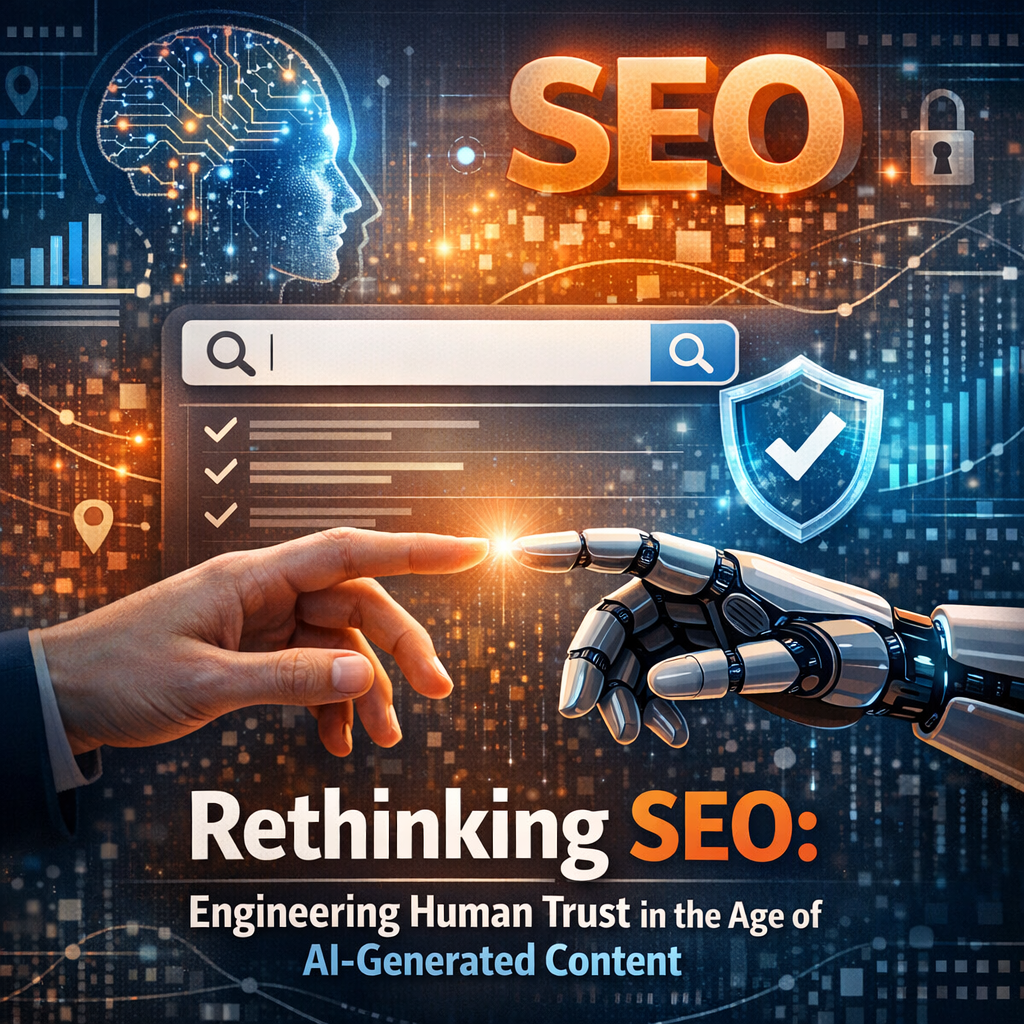
Unveiling the Future of SEO: How AI is Transforming Digital Marketing Strategies
Topic Introduction
In the rapidly evolving digital landscape, the confluence of artificial intelligence (AI) and search engine optimization (SEO) is reshaping the paradigms of digital marketing strategies. The integration of AI into SEO is not a mere trend but a transformative shift offering unparalleled opportunities for enhancing online visibility, analytics, and user engagement. For C-suite marketing and SEO professionals, understanding this evolution is crucial to maintaining a competitive edge and driving business growth.
Artificial intelligence, with its capabilities for processing vast amounts of data and making intelligent predictions, is now an integral part of SEO. At the core of AI-driven SEO is the ability to automate repetitive tasks, such as keyword research, competitor analysis, and performance metrics tracking. Furthermore, AI-driven tools can predict search trends and consumer behavior, enabling marketers to tailor their strategies with unprecedented precision. Platforms like Google’s AI-powered RankBrain have revolutionized how search queries are interpreted, emphasizing the importance of optimizing for user intent rather than just keywords.
AI-powered chatbots and virtual assistants have further augmented user experience by providing immediate, personalized responses to queries. This not only boosts engagement but also enhances the quality of leads by fostering personalized interactions. AI’s analysis of user data helps in understanding the nuances of consumer behavior, paving the way for crafting highly targeted marketing campaigns.
Moreover, visual content optimization through AI is revolutionizing SEO practices. AI tools can now analyze images and videos, improving searchability and accessibility, which are vital components in the era of visual-heavy internet consumption. As AI continues to evolve, its role in optimizing content for voice search is also becoming significant, considering that voice-activated searches are projected to increase exponentially in the coming years.
For C-suite executives, the challenge lies not only in embracing AI tools but also in strategically integrating them into comprehensive marketing plans. By doing so, businesses can enhance their digital footprints and strategically position themselves in an increasingly AI-dominated marketplace.
Features
AI’s influence on SEO isn’t just theoretical; it’s backed by significant academic and professional research. A study conducted by [McKinsey & Company](https://www.mckinsey.com/) highlights how businesses incorporating AI technologies have experienced marked improvements in marketing and sales performance, demonstrating tangible benefits for early adopters. According to the study, organizations using AI for marketing initiatives can increase their revenue by up to 5-10% due to enhanced personalization and targeting.
A report from [Accenture](https://www.accenture.com/) further corroborates these findings, showcasing that companies leveraging AI-based SEO tools witnessed heightened efficiency. Their research indicated a 30% increase in productivity among marketing teams, thanks to the automation of routine SEO tasks. This not only reduces time on mundane activities but also reallocates human resources to strategic initiatives that drive business growth.
Medical research, although indirectly related, provides compelling insights into the potential for AI-driven SEO strategies, particularly in user engagement and experience. A study in the [Journal of Medical Internet Research](https://www.jmir.org/) explored how AI tools improved patient engagement through personalized content delivery. The parallels in digital marketing are clear: AI-driven personalization fosters deeper user engagement, reflecting strategies used in healthcare to enhance patient communication.
Moreover, [Forbes](https://www.forbes.com/) has highlighted the impact of AI in real-time data processing, critical for making informed marketing decisions. Real-time insights allow marketing teams to adapt swiftly in response to consumer feedback and market changes, ensuring that SEO efforts are timely and relevant.
These studies underscore the immense potential of AI in revolutionizing SEO practices. By embracing these technologies, businesses can achieve improved search engine rankings and valuable consumer insights to drive proactive marketing strategies.
Conclusion
As AI continues to shape the landscape of digital marketing, C-suite executives must prioritize its integration into SEO strategies to maintain a competitive advantage. By leveraging AI’s capabilities, businesses can achieve enhanced efficiency, superior user engagement, and data-driven decision-making. The future of SEO is undeniably intertwined with AI, and those who adapt will lead the digital frontier.
Summary
AI’s integration with SEO is revolutionizing digital marketing by automating tasks, predicting trends, and enhancing user engagement. Businesses using AI experience better online visibility and marketing efficiency. Studies by McKinsey and Accenture report significant revenue and productivity boosts due to AI adoption. Applications in healthcare demonstrate AI’s potential for personalization in marketing. Real-time AI data processing aids adaptive strategies. For C-suite executives, embedding AI in SEO is imperative to remain competitive, offering enhanced decision-making and proactive marketing strategies.

Dominic E. is a passionate filmmaker navigating the exciting intersection of art and science. By day, he delves into the complexities of the human body as a full-time medical writer, meticulously translating intricate medical concepts into accessible and engaging narratives. By night, he explores the boundless realm of cinematic storytelling, crafting narratives that evoke emotion and challenge perspectives.
Film Student and Full-time Medical Writer for ContentVendor.com