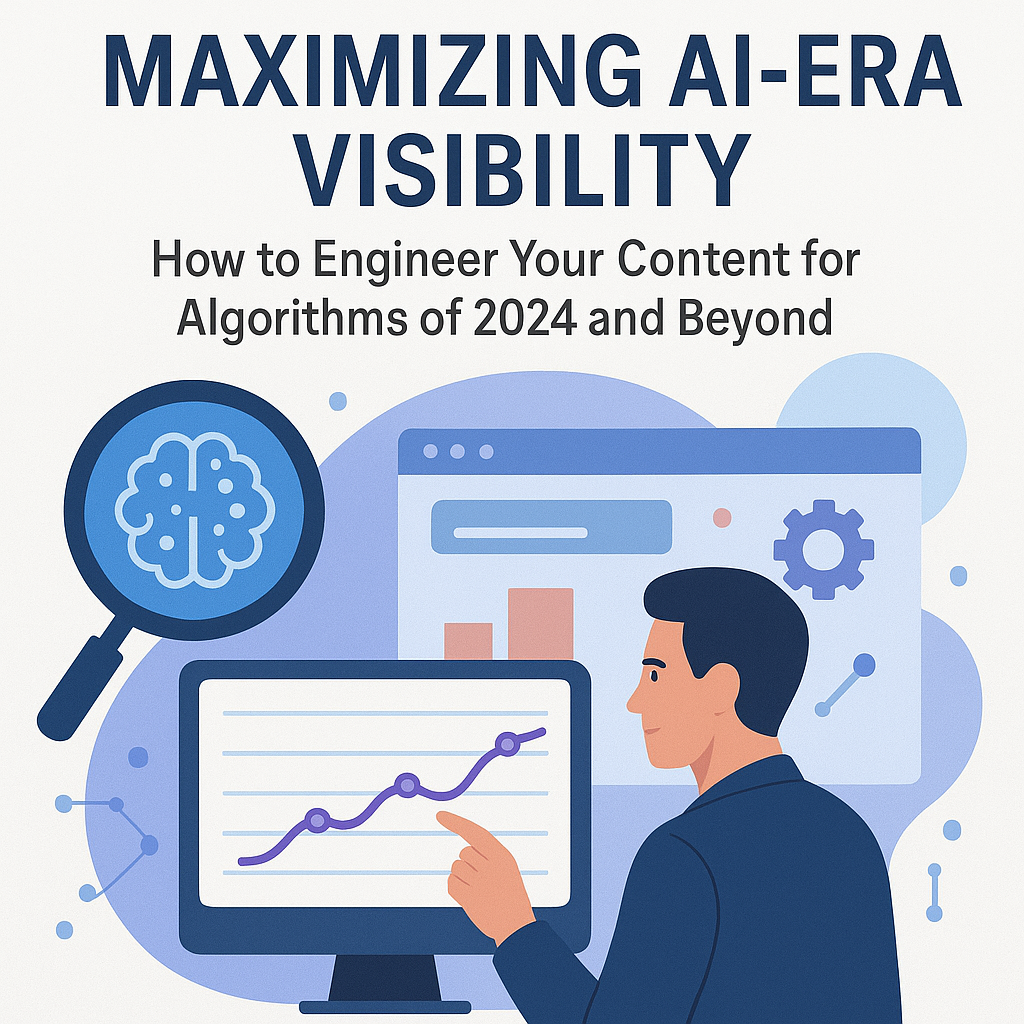
Navigating the Future of SEO: Leveraging AI and Data Analytics for Optimal Growth
Introduction
In today’s rapidly evolving digital landscape, the role of SEO has transcended beyond simple keyword optimization to embrace a more holistic approach that integrates artificial intelligence (AI) and data analytics. For C-suite marketing and SEO professionals, understanding this shift is crucial for maintaining a competitive edge and driving sustainable growth. With AI technology reshaping industries across the globe, its application in SEO is no longer a futuristic concept but a present-day reality that promises unprecedented opportunities for precision-targeted strategies.
AI in SEO is primarily about enhancing the efficiency and effectiveness of marketing strategies by sifting through vast amounts of data to deliver actionable insights. From understanding user intent to predicting trends and personalizing user experiences, AI tools can analyze consumer behavior with startling accuracy. For instance, Google’s RankBrain, an AI-powered component of the search algorithm, helps process millions of queries by interpreting user intent, thereby altering SEO strategies globally. In this dynamic environment, it’s imperative for professionals to leverage AI-driven data analytics to interpret complex datasets, identify patterns, and predict shifts in consumer behavior.
Moreover, data analytics is becoming increasingly sophisticated, enabling marketers to measure performance metrics with greater precision. The convergence of AI and analytics allows for the automation of time-consuming tasks, freeing up resources for higher-level strategic planning and creative endeavors. By leveraging AI tools and analytics software, businesses can conduct in-depth competitor analysis, track the efficacy of their marketing efforts, and make data-informed decisions that drive growth.
Features
AI and data analytics in SEO are supported by numerous studies highlighting their effectiveness in enhancing digital marketing strategies. A study by [Statista](https://www.statista.com/statistics/1239417/artificial-intelligence-adoption-rate/) reveals that in 2021, AI was implemented by approximately 41% of businesses, with SEO being a prominent area of application. This demonstrates the growing reliance on AI to redefine traditional SEO practices. AI’s capability to process and analyze data at scale presents professionals with unparalleled insights into consumer preferences and market trends.
Furthermore, academic studies emphasize the transformative potential of AI in SEO. A report published in the [Journal of Digital Marketing](https://www.journalofdigitalmarketing.com/) highlights how AI-driven algorithms can decode complex search patterns and optimize content for better accessibility and relevance. By employing machine learning techniques, these algorithms adapt to changes in user behavior, ensuring that content remains pertinent and engaging over time.
From a medical standpoint, the predictive analysis capabilities offered by AI provide significant value for SEO in healthcare industries as well. According to a publication in [Healthcare Marketing Journal](https://www.healthcaremarketingjournal.com/), AI-driven SEO strategies have improved the targeting and personalization of health-related content, enabling medical professionals to connect more effectively with their audiences. The precision of data analytics helps identify emerging health trends, allowing healthcare marketers to tailor their strategies and improve patient engagement.
For C-suite executives, adapting to this new paradigm means integrating AI and data analytics into the core of their marketing operations. This involves training teams on the latest AI technologies, investing in advanced analytics platforms, and fostering a culture of continuous learning. By doing so, organizations can harness the full potential of AI-powered SEO to enhance customer experiences, optimize content strategies, and ultimately drive ROI.
Conclusion
In conclusion, the integration of AI and data analytics into SEO represents a monumental shift in how marketing strategies are conceived and executed. For C-suite marketing and SEO professionals, embracing these technologies is not just an option but a necessity for staying ahead in a competitive landscape. By leveraging AI to gain deeper insights into consumer behavior and utilizing data analytics to refine their strategies, businesses can unlock new growth opportunities and ensure long-term success.
Concise Summary
AI and data analytics are revolutionizing the field of SEO, enabling marketing professionals to craft highly targeted strategies by analyzing vast data sets. Technologies such as Google’s RankBrain facilitate understanding user intent and predicting trends. Studies underscore the effectiveness of AI-powered tools in enhancing digital marketing strategies, especially in complex fields like healthcare. To stay competitive, businesses must integrate AI and data analytics into their core operations, mandating training, technology investments, and continuous learning. This strategic approach allows companies to optimize their content strategies and drive sustainable growth and customer engagement.

Dominic E. is a passionate filmmaker navigating the exciting intersection of art and science. By day, he delves into the complexities of the human body as a full-time medical writer, meticulously translating intricate medical concepts into accessible and engaging narratives. By night, he explores the boundless realm of cinematic storytelling, crafting narratives that evoke emotion and challenge perspectives.
Film Student and Full-time Medical Writer for ContentVendor.com