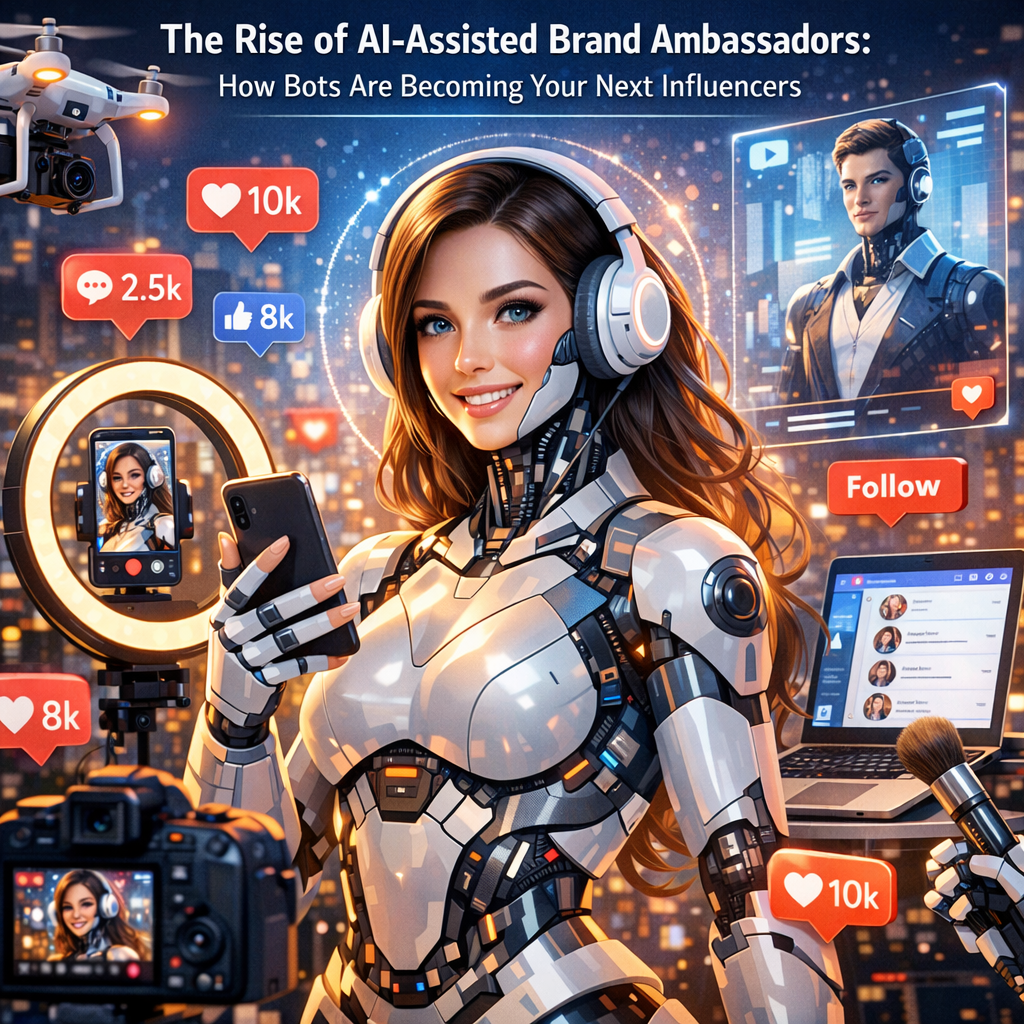
The Future of SEO: Harnessing AI for Enhanced Digital Marketing Strategies
Introduction: Understanding the Paradigm Shift
The digital landscape is continuously evolving, and with it, the strategies used by marketers to stay relevant and competitive. In recent years, Artificial Intelligence (AI) has made a prodigious impact on various sectors, including marketing and SEO. As businesses strive to enhance their online presence, the integration of AI into SEO practices represents a significant paradigm shift, particularly for C-suite executives who must navigate this transformation strategically. AI’s capability to analyze vast amounts of data at unprecedented speed and precision is revolutionizing how brands approach search engine optimization, content creation, and consumer engagement.
SEO has always been a foundational element of digital marketing, pivoted on understanding search algorithms to optimize website visibility. However, with search engines like Google integrating AI into their algorithms, such as through RankBrain and BERT, the rules of the game are changing. These AI-driven updates prioritize context and user intent over mere keyword matching. Consequently, organizations must re-evaluate their SEO strategies to align with AI-enhanced algorithms that can decipher complex language nuances and offer more refined search results.
For C-suite marketing professionals, the emphasis is shifting towards content that is not only keyword-rich but also contextually sound and aligned with user intent. AI tools can facilitate this by providing insights into consumer behavior, predicting trending topics, and even generating content that resonates with target audiences. Through machine learning and natural language processing (NLP), AI can help craft personalized experiences that are both meaningful and data-driven.
This shift presents both opportunities and challenges. While AI offers the potential to enhance efficiency and effectiveness, it also demands a strategic overhaul of existing processes and an understanding of sophisticated technologies. As stewards of digital growth, C-suite marketers and SEO professionals must embrace AI as a powerful ally in crafting strategies that are not only reactive but also predictive of market dynamics and consumer preferences.
Features: AI’s Contribution to SEO and Marketing Excellence
Numerous studies underscore the transformative impact of AI on SEO, showcasing tangible benefits that can be leveraged by marketing professionals. According to a study published in the [*Journal of Business Research*](https://www.journals.elsevier.com/journal-of-business-research), AI applications in SEO have been shown to improve segmentation and targeting, enabling businesses to tailor their marketing efforts with pinpoint accuracy. This is achieved through AI’s ability to analyze consumer demographics, preferences, and behavior, thus facilitating personalized marketing experiences that enhance customer engagement and retention.
Furthermore, AI’s role in automating mundane SEO tasks, such as keyword research, competitive analysis, and data reporting, has freed up valuable time for professionals to focus on strategy and creativity. A study by [*McKinsey*](https://www.mckinsey.com) highlights that AI-driven automation leads to a significant reduction in operational costs while simultaneously boosting productivity by automating routine tasks that traditionally consumed time and resources.
In the medical field, AI’s prowess is evident in its application for predictive analytics, which is now influencing SEO strategies for healthcare-related industries. A report from [*The Lancet*](https://www.thelancet.com) explores how AI can predict patient queries and trends, which organizations can use to refine their content to align with emerging health topics and concerns. This proactive approach not only amplifies visibility but also positions healthcare providers as authoritative sources for accurate medical information.
The adoption of AI in SEO is not without its challenges. The [*Harvard Business Review*](https://hbr.org) warns that while AI can provide valuable insights, reliance on automated analytics without the expertise to interpret and apply these insights could lead to strategic missteps. It underscores the importance for organizations to invest in skilled personnel who can bridge the gap between AI data and actionable SEO and marketing strategies.
Conclusion: Future-Proofing SEO Strategy with AI
The integration of AI into SEO and digital marketing strategies is not a fleeting trend but an evolution that offers significant competitive advantages. As AI continues to mature, its capabilities will further fine-tune marketing efforts, ensuring they are aligned with real-time consumer demands and search engine innovations. For C-suite executives, embracing AI is paramount to sustaining growth, optimizing resource allocation, and future-proofing SEO strategies in an ever-evolving digital arena. By doing so, businesses can not only meet today’s challenges but anticipate tomorrow’s opportunities, maintaining their edge in a crowded online marketplace.
Concise Summary
Integrating AI into SEO and digital marketing represents a major shift, offering improved efficiency, personalization, and strategic insights. As AI technologies, like Google’s RankBrain and BERT algorithms, advance, businesses must evolve and refine their SEO strategies to remain competitive. This involves focusing on user intent and context, while leveraging AI for consumer behavior insights, trend prediction, and content generation. While AI automates many SEO tasks, human expertise is essential to interpret and apply AI data effectively. Embracing AI will enable businesses to future-proof their strategies, adapting to changing markets and consumer dynamics.
References:
1. [Journal of Business Research](https://www.journals.elsevier.com/journal-of-business-research)
2. [McKinsey & Company](https://www.mckinsey.com)
3. [The Lancet](https://www.thelancet.com)
4. [Harvard Business Review](https://hbr.org)

Dominic E. is a passionate filmmaker navigating the exciting intersection of art and science. By day, he delves into the complexities of the human body as a full-time medical writer, meticulously translating intricate medical concepts into accessible and engaging narratives. By night, he explores the boundless realm of cinematic storytelling, crafting narratives that evoke emotion and challenge perspectives.
Film Student and Full-time Medical Writer for ContentVendor.com