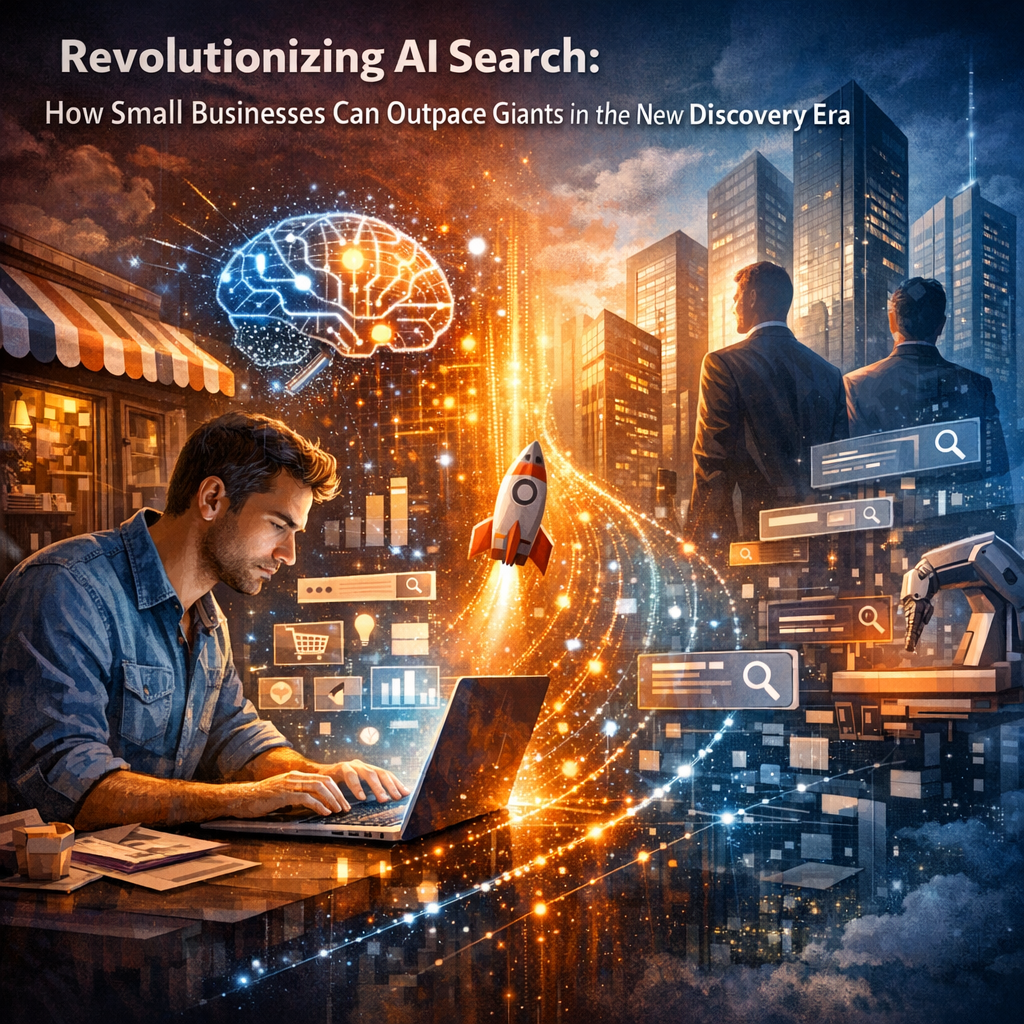
Unlocking the Power of AI in SEO: A Strategic Guide for C-Suite Executives
In today’s digital age, the landscape of search engine optimization (SEO) is continually evolving. As competition in the online space intensifies, businesses are increasingly turning to advanced technologies to maintain a competitive edge. Among these technologies, artificial intelligence (AI) stands out as a transformative force in the realm of SEO. With its ability to process vast amounts of data and adapt to ever-changing algorithms, AI is not just a tool but a cornerstone of strategic SEO planning.
For C-suite executives, understanding the potential of AI in SEO is crucial. AI-driven SEO strategies can enhance decision-making processes, optimize resource allocation, and ultimately drive growth. By harnessing AI’s capacity to analyze user behavior, personalize content, and predict trends, businesses can create more effective and targeted marketing campaigns. Moreover, AI can provide insights into both short-term and long-term planning, ensuring companies can anticipate shifts in consumer behavior and adapt their strategies accordingly.
AI acts as a catalyst in automating repetitive tasks such as keyword research and content optimization. Tools like [BrightEdge](https://www.brightedge.com/) and [MarketMuse](https://www.marketmuse.com/) employ machine learning algorithms to provide insights into content performance and competitive analysis. Such tools allow marketing professionals to focus on strategic initiatives rather than getting bogged down in mundane tasks. Furthermore, AI-enhanced tools can predict search engine trends by analyzing massive datasets, a capability beyond manual human effort. This predictive power allows businesses to be proactive in their SEO strategies, making adjustments before potential downturns or shifts occur.
Moreover, AI’s role in enhancing the customer experience cannot be overstated. With AI, businesses can offer personalized content recommendations, thereby improving engagement and conversion rates. Voice search optimization, powered by AI, is yet another area gaining momentum. As voice-activated digital assistants like Siri and Alexa become commonplace, ensuring content is optimized for voice search can significantly impact a company’s visibility and reach. This includes adjusting content to more conversational language and ensuring website architecture supports quick and accurate responses to voice queries.
For C-suite marketing executives, integrating AI into SEO strategies is not just about keeping up with trends but about pioneering the future of digital marketing. Understanding AI’s nuances and leveraging its capabilities can lead to sustainable competitive advantages. Embracing this technology early on will be key to staying ahead in the rapidly evolving digital landscape.
Features
AI’s impact on SEO is supported by various studies and professional analyses. A significant study by the [McKinsey Global Institute](https://www.mckinsey.com/) highlights AI’s transformative potential across industries, including marketing. The study emphasizes that AI can increase the efficiency of marketing initiatives by augmenting human decision-making processes and offering more precision in targeting and personalization.
In the realm of digital marketing, a study by the Massachusetts Institute of Technology ([MIT](https://mitsloan.mit.edu/)) Sloan School of Management underscores the effectiveness of AI in optimizing customer interactions. The research findings indicate that companies utilizing AI tools in their marketing efforts report substantial improvements in customer satisfaction and conversion rates. By leveraging AI algorithms to analyze customer data and predict their preferences, businesses can tailor their marketing strategies to suit individual needs, thus enhancing the overall customer experience.
Furthermore, AI’s role in content creation and optimization is backed by insights from a report by [Gartner](https://www.gartner.com/). This research reveals that AI can significantly reduce the time spent on content creation processes by automating various tasks such as keyword analysis and SEO auditing. Automation not only enhances efficiency but also ensures that the content is aligned with the latest SEO best practices, thereby improving search engine rankings.
Medical studies are also beginning to explore AI’s impact beyond traditional industries. For instance, an article in the [Journal of Medical Internet Research](https://www.jmir.org/) examines AI’s potential in improving health-related content optimization. The study proposes that by using AI to analyze large datasets of medical literature, businesses can create highly accurate and reliable health content that adheres to SEO principles, thereby improving the dissemination of health information to a broader audience.
Through professional insights and academic research, these studies collectively highlight AI’s pivotal role in revolutionizing SEO strategies. By integrating AI-driven tools and methodologies, C-suite executives can harness the power of data-driven insights to enhance their digital marketing campaigns, ensuring a competitive position in their respective industries.
Conclusion
AI’s integration into SEO is no longer a futuristic concept but a present reality that reshapes the digital marketing landscape. For C-suite executives, embracing AI-driven strategies can unlock new opportunities for growth, efficiency, and innovation. By understanding and implementing AI’s capabilities, businesses can stay ahead of the curve, achieving substantial advancements in search engine visibility and customer engagement. Investing in AI technologies today will ensure not just survival but thriving in the competitive digital frontier tomorrow.
Concise Summary
AI is revolutionizing SEO by automating tasks like keyword research and enhancing content personalization, leading to improved engagement and conversion rates. Tools such as BrightEdge and MarketMuse leverage AI for strategic insights and trend predictions. C-suite executives can benefit from AI by optimizing decision-making and resource allocation. Studies by McKinsey, MIT, and Gartner emphasize AI’s role in enhancing marketing efficiency and customer satisfaction. Understanding and integrating AI capabilities is crucial for businesses to maintain a competitive advantage in the evolving digital marketing landscape. Investing in AI technologies now is vital for future success.

Dominic E. is a passionate filmmaker navigating the exciting intersection of art and science. By day, he delves into the complexities of the human body as a full-time medical writer, meticulously translating intricate medical concepts into accessible and engaging narratives. By night, he explores the boundless realm of cinematic storytelling, crafting narratives that evoke emotion and challenge perspectives.
Film Student and Full-time Medical Writer for ContentVendor.com