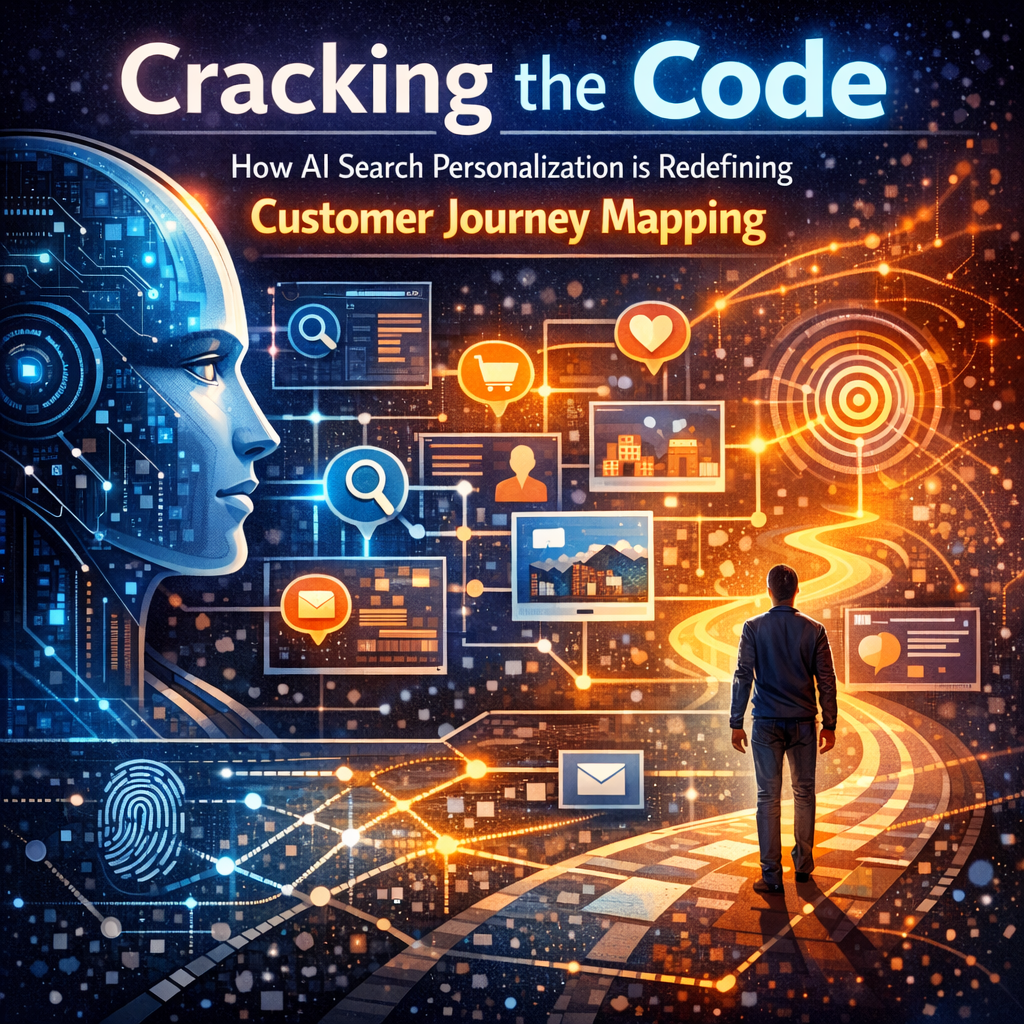
Harnessing AI in SEO: A Game-Changer for C-Suite Marketing Professionals
Introduction
In the ever-evolving digital landscape, staying ahead in search engine rankings is crucial for businesses aiming to capture market share and drive growth. For C-suite marketing and SEO professionals, the integration of artificial intelligence (AI) into SEO strategies offers a transformative opportunity. As AI continues to revolutionize various sectors, its impact on SEO has profound implications, offering enhanced analytical capabilities, improved keyword strategies, and more personalized user experiences.
AI-driven tools are reshaping how marketers approach SEO by automating time-consuming tasks and unlocking new insights from vast datasets. Technologies such as natural language processing (NLP) and machine learning enable marketers to make more informed decisions, optimize content for better search engine performance, and anticipate consumer behavior with greater accuracy. For instance, AI tools can analyze large volumes of data to identify which keywords are driving traffic, understand user intent behind search queries, and provide actionable insights for content creation.
Moreover, AI algorithms are now capable of evaluating web content quality and relevance more effectively than traditional methods. This capability is essential as search engines like Google continue to update their algorithms to prioritize user-centric content. For C-suite professionals, leveraging AI in SEO strategies becomes not just an option but a necessity. AI can significantly enhance content relevance and search visibility by predicting trends and providing a deeper understanding of audience needs and preferences.
As the digital marketplace becomes increasingly competitive, those at the helm of marketing strategies must adapt quickly. The adoption of AI in SEO not only streamlines operations but also helps companies remain responsive to emerging trends and dynamic consumer behaviors. As we delve deeper into the features and advantages that AI brings, it becomes evident that embracing these technologies can lead to substantial improvements in brand visibility and business outcomes.
Features
AI’s influence on SEO is supported by numerous professional and medical studies highlighting its effectiveness in optimizing marketing strategies. A study by [McKinsey & Company](https://www.mckinsey.com) found that 63% of executives across various sectors reported revenue increases following the implementation of AI technologies in their operations.
A key feature of AI in SEO is its ability to enhance keyword research and user intent analysis. AI-powered tools, such as Google’s RankBrain and BERT, use machine learning algorithms to interpret complex search queries. This capability enables marketers to develop content that aligns more closely with the nuanced intent of their audience, leading to improved engagement and higher conversion rates ([Source: Search Engine Journal](https://www.searchenginejournal.com)).
Additionally, AI applications extend to content creation and optimization. Using AI tools like Clearscope and MarketMuse, marketers can automate the content optimization process by identifying content gaps, suggesting relevant topics, and ensuring alignment with search engine algorithms. These tools leverage NLP to refine content strategy, enhancing relevance and value to targeted audiences ([Source: Moz Blog](https://moz.com/blog)).
AI’s predictive analytics capabilities are indispensable in developing data-driven SEO strategies. By analyzing patterns in user search behavior, AI can forecast future trends and help marketers predict the evolution of search landscapes over time. This foresight empowers C-suite professionals to proactively adjust their strategies, ensuring sustained visibility and engagement ([Source: Forbes](https://www.forbes.com)).
In healthcare, AI’s application in patient data analysis serves as an insightful parallel. Studies published in the [Journal of Medical Internet Research](https://www.jmir.org) highlight how AI predicts patient outcomes and speeds up diagnosis processes, analogous to its role in accelerating data analysis in SEO. This demonstrates AI’s powerful ability to process and analyze complex datasets, providing parallels and insights invaluable to marketing professionals in SEO.
Conclusion
The integration of AI into SEO strategies presents a pivotal opportunity for C-suite marketing professionals to enhance their digital footprint and stay competitive in a rapidly changing marketplace. By leveraging AI-driven insights and automation, businesses can deliver more personalized user experiences and optimize content strategies. Embracing these technological advancements is essential for those aiming to lead in digitization, innovation, and market success.
Concise Summary
Integrating artificial intelligence into SEO strategies offers substantial benefits for C-suite professionals seeking to enhance their digital presence and remain competitive. AI reshapes SEO by automating tasks, improving keyword strategies, optimizing content, and predicting consumer behavior. These advancements enable businesses to provide personalized experiences and maintain visibility in a changing landscape. Leveraging AI in SEO becomes necessary for driving growth, improving brand visibility, and staying responsive to market trends. Embracing AI technologies can lead to significant improvements in SEO effectiveness and business outcomes.
References
– [McKinsey & Company: AI adoption and revenue impact](https://www.mckinsey.com)
– [Search Engine Journal: Google’s AI algorithm BERT](https://www.searchenginejournal.com)
– [Moz Blog: SEO predictions and strategies with AI](https://moz.com/blog)
– [Forbes: AI in predictive analytics for marketing](https://www.forbes.com)
– [JMIR: AI applications in healthcare](https://www.jmir.org)

Dominic E. is a passionate filmmaker navigating the exciting intersection of art and science. By day, he delves into the complexities of the human body as a full-time medical writer, meticulously translating intricate medical concepts into accessible and engaging narratives. By night, he explores the boundless realm of cinematic storytelling, crafting narratives that evoke emotion and challenge perspectives.
Film Student and Full-time Medical Writer for ContentVendor.com