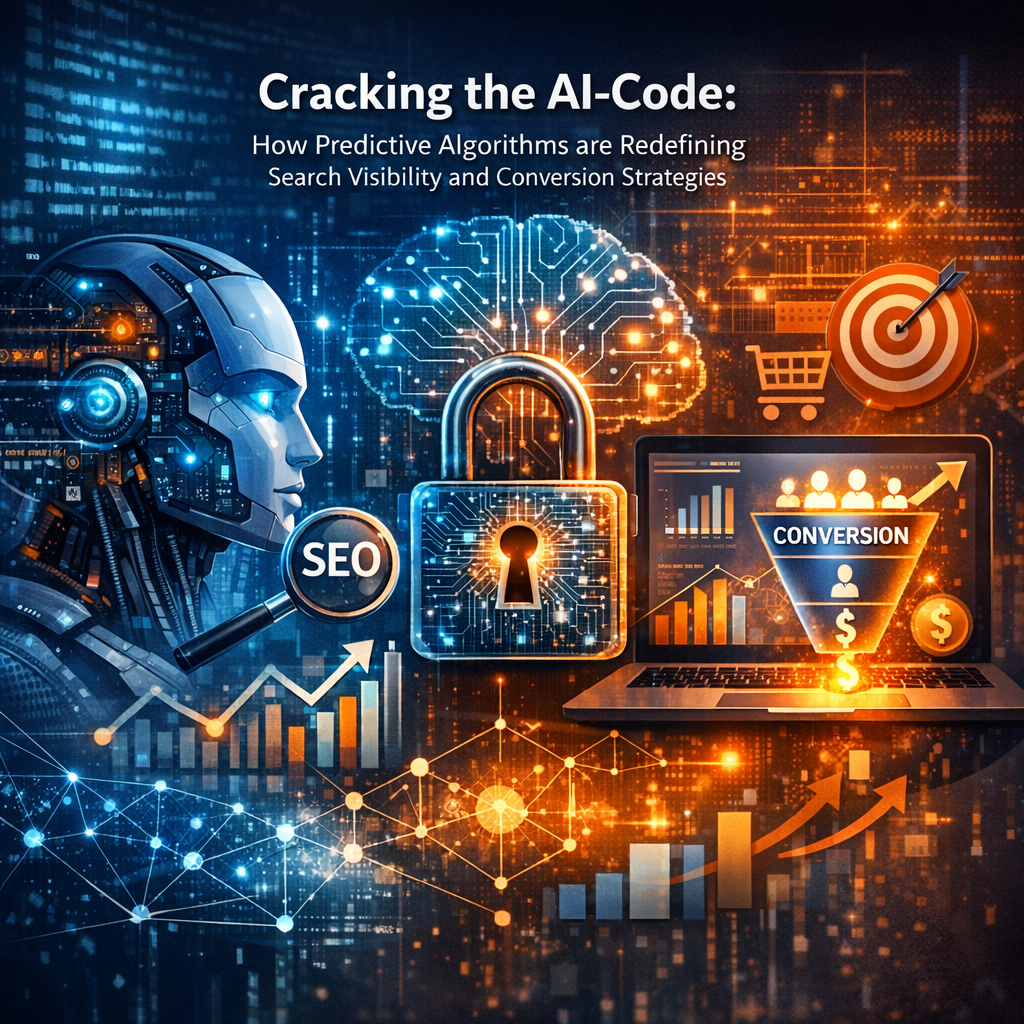
Unlocking SEO Potential with AI: Transforming Modern Marketing Strategies
Introduction
In the ever-evolving digital landscape, staying ahead of the competition requires constant innovation and adaptation. For C-suite marketing and SEO professionals, embracing Artificial Intelligence (AI) is not just advantageous but necessary. AI has profoundly reshaped the way businesses approach search engine optimization and digital marketing. From data analysis to personalized customer interactions, AI technology offers opportunities to enhance marketing strategies, drive efficiency, and improve ROI.
In recent years, AI has rapidly transitioned from a futuristic concept to a present-day necessity. This technological advancement has opened new horizons for SEO and marketing professionals committed to staying at the cutting edge of search engine dynamics. For instance, AI can process and analyze big data far beyond human capability, allowing marketers to obtain deep insights into customer behavior, trends, and preferences. With AI, SEO professionals can automate repetitive tasks, analyze complex datasets, and achieve precision targeting, all of which enhance the effectiveness of marketing campaigns.
Moreover, AI’s role in SEO extends to content personalization, significantly impacting user experience. By utilizing machine learning algorithms, businesses can tailor their content to meet individual needs, thus driving higher user engagement and conversion rates. AI-powered tools like chatbots and voice search recognition have further expanded the potential of customer interaction, making it more interactive and efficient. Brands can now integrate these tools to provide 24/7 customer support, gather valuable consumer feedback, and enhance customer satisfaction.
AI also empowers predictive analysis, giving organizations the ability to foresee changes in market trends and adjust strategies proactively. This forward-looking approach helps marketers remain agile and stay one step ahead in a fiercely competitive environment. As AI continues to evolve and integrate into SEO strategies, understanding its capabilities will be critical for C-suite professionals who seek to harness its full potential and achieve a competitive advantage.
Features
AI’s emerging influence on marketing is supported by numerous professional and academic studies highlighting its significant impact on SEO and consumer behavior. A study conducted by McKinsey & Company underscores the transformative power of AI technologies across industries, noting that marketing and sales had the highest potential for AI integration, delivering an estimated increase in potential value added of up to $1.4 trillion annually ([McKinsey & Company](https://www.mckinsey.com/business-functions/mckinsey-analytics/our-insights/the-state-of-ai-in-2020/)).
In the context of SEO, AI-driven analysis tools are now harnessing machine learning capabilities to improve search rankings. A 2020 study published in the Journal of Business Research explored the effectiveness of AI in search engine results page (SERP)-ranking predictions, emphasizing that AI models can significantly enhance predictive accuracy for SEO strategies ([Journal of Business Research](https://www.sciencedirect.com/science/article/abs/pii/S0148296319304534)).
At a practical level, AI’s application in predictive modeling is illustrated by its role in natural language processing (NLP), which allows search engines to understand and interpret complex user queries accurately. Google’s BERT update is a prime example of AI enhancing search precision by improving the way search algorithms interpret human language, as noted in a case study by Search Engine Journal ([source](https://www.searchenginejournal.com/google-bert-update/)). This breakthrough in NLP highlights the importance of integrating AI into SEO strategies for C-suite marketing professionals seeking to stay ahead of emerging trends.
The benefits of AI extend beyond technical improvements to include increased customer satisfaction and engagement. According to a research study in the International Journal of Information Management, businesses that implemented AI-driven personalization experienced enhanced customer loyalty and a significant uptick in sales conversion rates ([International Journal of Information Management](https://www.sciencedirect.com/journal/international-journal-of-information-management)). With AI, marketers are empowered to understand customer preferences with precision, tailor content accordingly, and deliver relevant experiences that build brand loyalty.
Conclusion
As AI continues to redefine the contours of digital marketing and SEO, the ability to leverage AI effectively will become pivotal for C-suite professionals. By integrating AI into their strategy, businesses can unlock unparalleled insights, enhance customer experiences, and ultimately drive more substantial results in a competitive market. Embracing AI is no longer a futuristic fantasy but a present-day imperative, promising a new era of innovation and growth shaped by intelligent, data-driven decision-making.
Summary: Embracing AI in SEO and marketing is crucial for gaining a competitive edge. From big data analysis to personalized content delivery, AI reshapes marketing strategies, enhances user engagement, and improves ROI. Studies highlight AI’s role in elevating predictive accuracy, boosting SERP rankings, and increasing customer loyalty. For C-suite professionals, integrating AI provides strategic foresight, helping businesses adapt to trends and deliver superior customer experiences, ensuring long-term success.

Dominic E. is a passionate filmmaker navigating the exciting intersection of art and science. By day, he delves into the complexities of the human body as a full-time medical writer, meticulously translating intricate medical concepts into accessible and engaging narratives. By night, he explores the boundless realm of cinematic storytelling, crafting narratives that evoke emotion and challenge perspectives.
Film Student and Full-time Medical Writer for ContentVendor.com