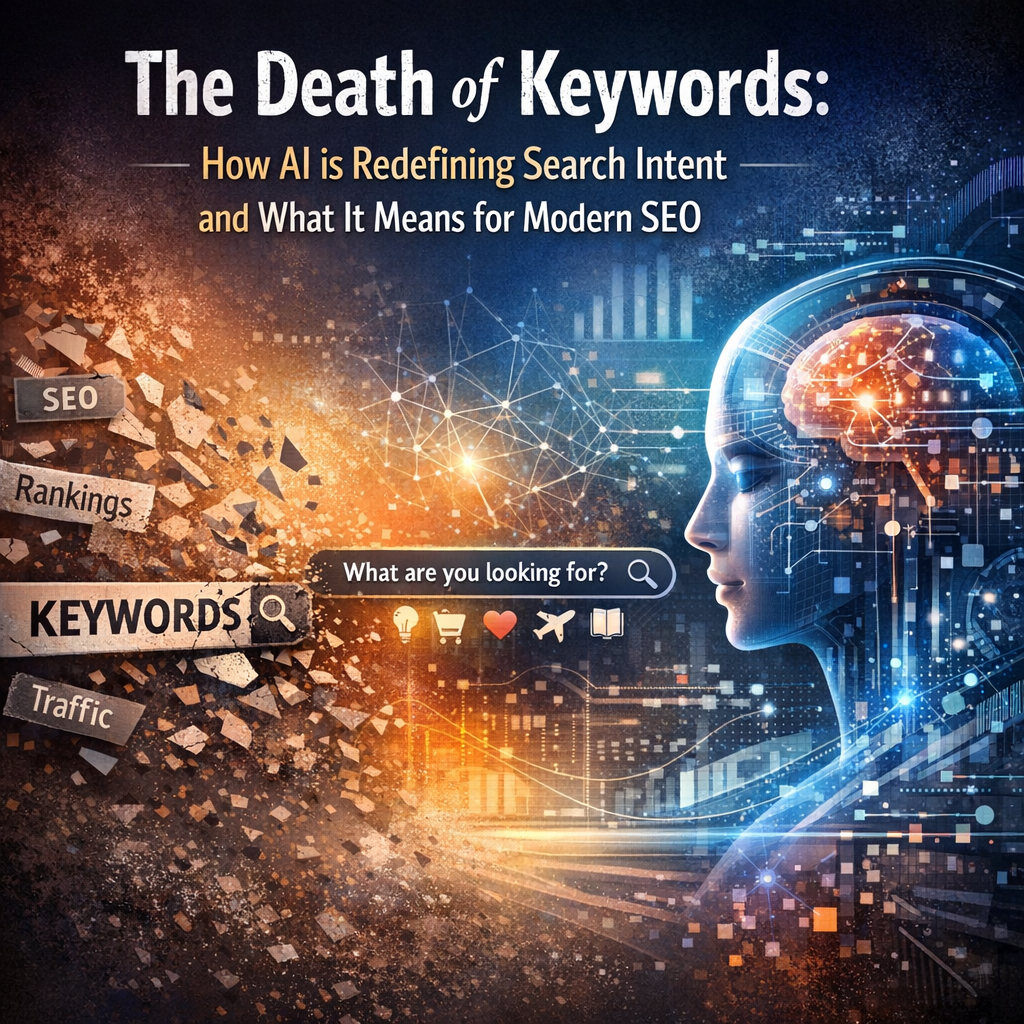
Title: The Role of AI in Transforming C-Suite SEO Strategies
Introduction
In a rapidly evolving digital landscape, C-suite marketing professionals and SEO strategists are continuously challenged to stay ahead of the curve. Artificial Intelligence (AI) is one of the most transformative forces in this arena. As complex algorithms become more adept at understanding and predicting human behavior, AI is reshaping how businesses approach SEO and digital marketing strategies. AI’s ability to process vast amounts of data quickly and accurately enables more nuanced insights and strategic decision-making.
AI-powered tools can enhance keyword research, automate content creation, optimize the user experience, and personalize marketing tactics, making them invaluable assets for C-suite executives aiming to drive growth and innovation. For instance, Google’s use of AI through RankBrain, a component of its search algorithm, helps the search engine understand the intent behind queries, thereby improving search accuracy and relevance for users. This fundamentally changes how businesses must approach their SEO strategies to remain visible and competitive in search engine results pages (SERPs).
Moreover, AI systems like Natural Language Processing (NLP) have facilitated sophisticated content analysis, allowing marketers to better align their content with user intent and search engines’ expectations. These systems can identify topics, sentiments, and even predict content performance, thus streamlining the way businesses generate and distribute content. As competition intensifies, the integration of AI in digital marketing is no longer a luxury but a necessity for businesses aiming to maintain a competitive edge in the marketplace.
For C-suite professionals, the implications of AI extend beyond the granular aspects of SEO. The strategic potential of AI lies in its ability to transform data into actionable insights, thereby facilitating more informed decision-making, driving efficiency, and ultimately boosting business outcomes. This shift necessitates a deep understanding of AI capabilities, ethical considerations, and a commitment to continuous learning and adaptation in today’s dynamic digital environment.
Features
Recent research underscores the transformative impact of AI on SEO and digital marketing. A [2022 study by McKinsey & Company](https://www.mckinsey.com/) found that companies leveraging AI for marketing and SEO saw an average increase in productivity by 40% and reduction in costs by 20%. This study highlights AI’s potential to enhance operational efficiency while simultaneously boosting marketing effectiveness.
In the medical field, AI’s capabilities are illustrated by its success in diagnosing diseases through pattern recognition, akin to SEO professionals using AI to identify patterns in consumer behavior. For example, a [2021 study published in “The Lancet”](https://www.thelancet.com/) demonstrated how AI algorithms were able to match the diagnostic accuracy of human doctors in interpreting medical imaging. This technological advancement in healthcare parallels how AI in digital marketing can accurately analyze large datasets to predict consumer trends and optimize SEO strategies.
Furthermore, the application of AI-driven chatbots in customer service has provided marketers with valuable data that feeds into SEO strategies. A report from [Gartner](https://www.gartner.com/) projected that by 2025, AI will manage 95% of all customer interactions, significantly influencing how businesses gather insights and optimize user experience (UX). For instance, AI chatbots can analyze language used by customers to identify frequent queries and concerns, providing marketers with key insights into consumer needs, which can then be translated into targeted SEO strategies and content creation.
Additionally, [Accenture’s 2023 report](https://www.accenture.com/) on technology trends highlights how AI is revolutionizing personalization in marketing, allowing businesses to tailor content and search experiences to individual users. This precision in targeting enhances user engagement and optimizes conversion rates. The report emphasizes that businesses integrating AI-driven personalization into their SEO strategies are better positioned to achieve significant return on investment (ROI).
Conclusion
The integration of AI into C-suite SEO strategies is an imperative evolution for forward-thinking businesses. As AI continues to evolve, its role in revolutionizing digital marketing will only expand, offering unprecedented opportunities for optimization and growth. By embracing AI, C-suite professionals can harness its potential to drive efficiency, enhance consumer engagement, and ultimately achieve sustainable competitive advantage in an increasingly digital world.
Concise Summary
Artificial Intelligence (AI) is reshaping C-suite SEO strategies by enhancing keyword research, automating content creation, and optimizing user experience. AI tools like RankBrain and Natural Language Processing (NLP) facilitate nuanced insights and strategic decision-making, making them essential for competition in search engine results pages (SERPs). Studies highlight AI’s impact, revealing increased productivity and reduced costs in companies leveraging AI. AI-driven chatbots provide valuable consumer data, influencing SEO strategies. Ultimately, AI empowers C-suite professionals to make informed decisions, drive efficiency, and achieve a competitive edge in digital marketing.

Dominic E. is a passionate filmmaker navigating the exciting intersection of art and science. By day, he delves into the complexities of the human body as a full-time medical writer, meticulously translating intricate medical concepts into accessible and engaging narratives. By night, he explores the boundless realm of cinematic storytelling, crafting narratives that evoke emotion and challenge perspectives.
Film Student and Full-time Medical Writer for ContentVendor.com