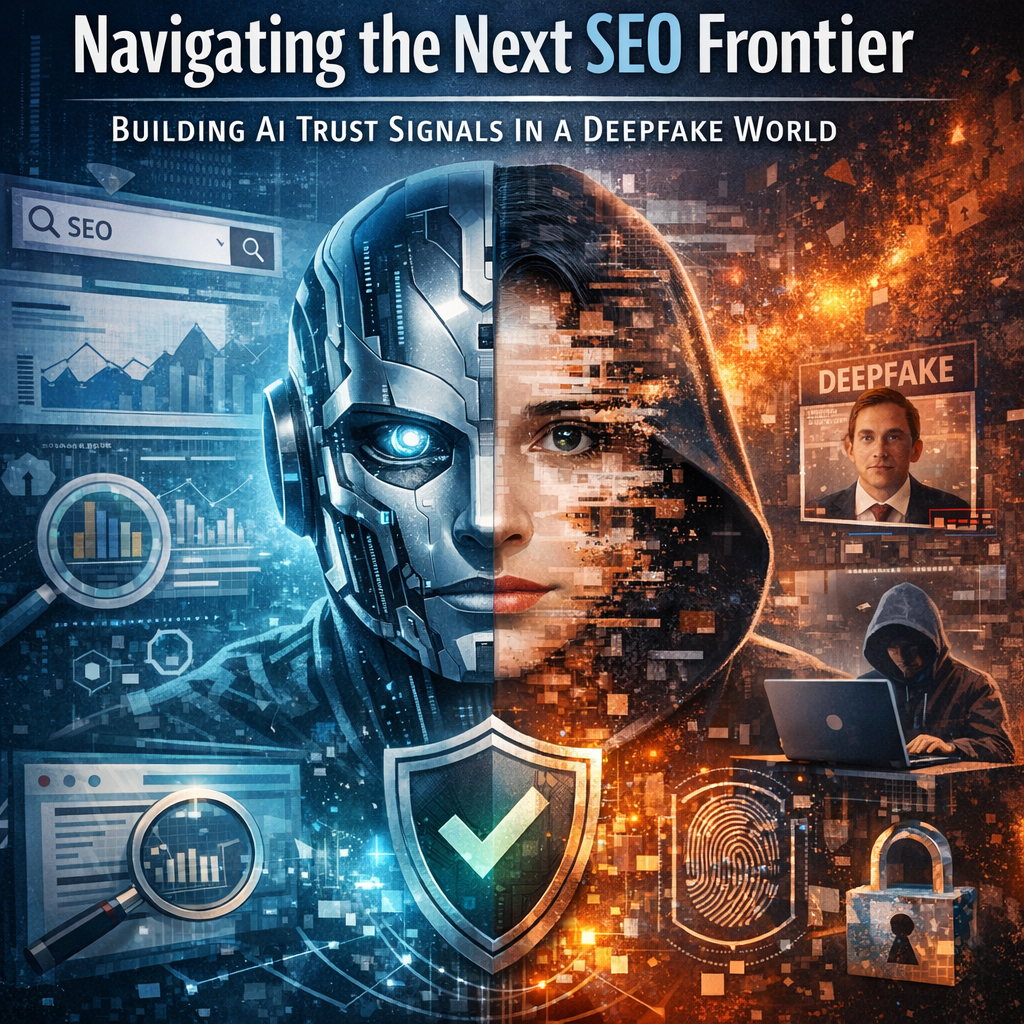
Unlocking SEO Potential: How AI and Machine Learning are Revolutionizing Digital Marketing Strategies
Introduction
In a digital landscape that is swiftly evolving, C-suite marketing and SEO professionals are tasked with staying ahead of the curve. One of the most transformative developments in recent years has been the integration of Artificial Intelligence (AI) and Machine Learning (ML) in digital marketing strategies. These technologies are not just buzzwords; they are revolutionizing how brands interact with their audiences, optimize their content, and drive customer engagement.
AI and ML provide unprecedented capabilities when it comes to data analysis, content personalization, and predictive insights. For marketers, this means being able to discern customer behaviors and preferences with remarkable precision. This level of insight enables the creation of targeted marketing strategies that are more likely to convert leads into loyal customers.
Furthermore, AI-powered tools are already transforming SEO practices. From smart algorithms that dictate search engine rankings to tools that help in identifying keyword trends and user intent, AI and ML are indispensable for crafting strategies that enhance visibility and drive traffic. These technologies are instrumental not only in automating repetitive tasks such as data collection and analysis but also in offering marketers the ability to focus on creative strategy development.
Recent studies suggest that businesses leveraging AI and ML in their digital strategies report significant improvements in ROI and conversion rates. As these technologies continue to evolve, they offer exciting possibilities for crafting highly personalized customer experiences, which is vital in today’s customer-centric marketing world. For C-suite professionals responsible for the direction of their company’s digital marketing strategy, understanding and harnessing AI and ML is crucial for maintaining competitive advantage and fostering sustainable growth.
Features
AI and ML applications in digital marketing are backed by extensive professional and scientific research. A [study by MIT Sloan Management Review](https://sloanreview.mit.edu/article/artificial-intelligence-for-the-real-world/) highlights that companies using AI for their marketing strategies have seen significant improvements in efficiency and customer satisfaction. This research indicates that AI optimizes how firms interact with customers by offering personalized experiences that meet individual needs, thereby reducing churn rate and fostering loyalty.
Moreover, a [report from McKinsey & Company](https://www.mckinsey.com/capabilities/quantumblack/our-insights/an-executives-guide-to-ai) outlines how companies that integrate AI-driven insights into their marketing operations can achieve results up to 20% higher than those of their peers who do not. This is because AI models analyze vast amounts of data much faster and more accurately than human analysts, providing real-time insights that can flexibly adapt to market changes.
Medical and psychological studies also emphasize the significance of AI in understanding consumer behavior. For instance, the predictive capabilities of AI can be used to monitor consumer sentiment and adjust strategies accordingly. This is already being used in sectors such as health tech, where [studies demonstrate](https://www.ncbi.nlm.nih.gov/pmc/articles/PMC7371400/) AI’s role in analyzing patient feedback to improve health service delivery. Similarly, these methodologies can be adapted in digital marketing to enhance customer satisfaction and engagement levels.
The evolution of AI in marketing is supported by ongoing advancements in neural network technology, which is the bedrock of machine learning. Google’s RankBrain, an AI system used to process search queries, is a prime example of how these technologies are reshaping SEO. It uses machine learning to better understand searcher intent and deliver more relevant search results, thus pushing SEO professionals to optimize for user experiences rather than just keyword density.
Conclusion
AI and Machine Learning are not just the future of digital marketing—they are the present. For C-suite marketing and SEO professionals, understanding the integration and application of these technologies is imperative. Investing in AI-powered tools is not merely about staying competitive; it’s about pioneering innovative strategies that lead to sustained growth. As AI continues to evolve, so too will the capabilities of those who harness its potential, ensuring success in the digitally driven future of marketing.
Concise Summary
AI and ML are transforming digital marketing by providing deeper insights into customer behavior, enabling highly targeted strategies, and improving SEO practices. Companies employing these technologies report significant ROI and conversion gains. AI aids in data analysis, content personalization, and understanding user intent, shifting focus from repetitive tasks to creative strategy. As AI evolves, so too does the potential for innovative marketing approaches, emphasizing its crucial role for competitive advantage and growth in today’s market.
References
– [Study by MIT Sloan Management Review](https://sloanreview.mit.edu/article/artificial-intelligence-for-the-real-world/)
– [Report from McKinsey & Company](https://www.mckinsey.com/capabilities/quantumblack/our-insights/an-executives-guide-to-ai)
– [Medical Study on AI](https://www.ncbi.nlm.nih.gov/pmc/articles/PMC7371400/)

Dominic E. is a passionate filmmaker navigating the exciting intersection of art and science. By day, he delves into the complexities of the human body as a full-time medical writer, meticulously translating intricate medical concepts into accessible and engaging narratives. By night, he explores the boundless realm of cinematic storytelling, crafting narratives that evoke emotion and challenge perspectives.
Film Student and Full-time Medical Writer for ContentVendor.com