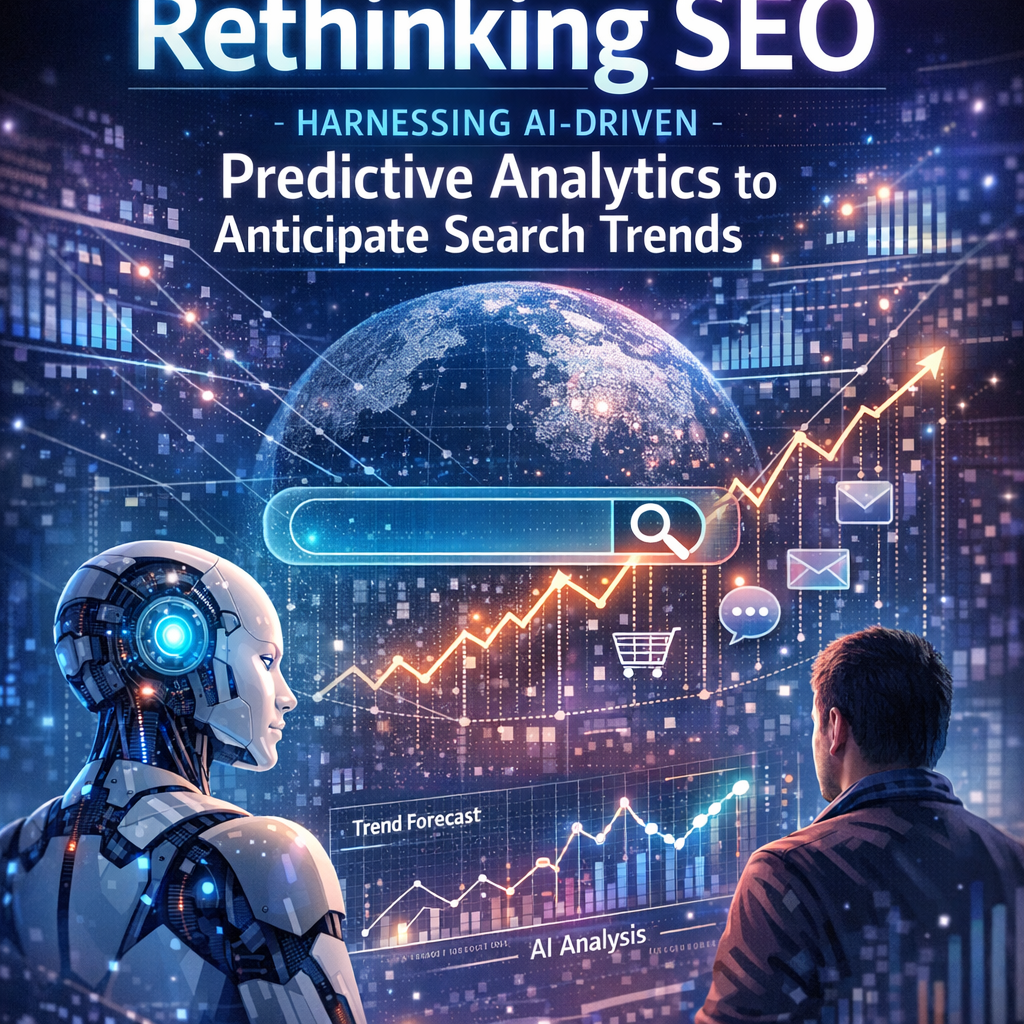
The Future of SEO: Integrating Artificial Intelligence to Drive Unprecedented Marketing Performance
Introduction
In the rapidly evolving digital landscape, the fusion of Artificial Intelligence (AI) and Search Engine Optimization (SEO) is poised to redefine how businesses approach online marketing strategies. At the forefront of this transformation are C-suite marketing and SEO professionals, tasked with navigating these emerging technologies to maintain a competitive edge. SEO is no longer just about keyword placements and backlinks; it’s now about leveraging data-driven insights and intelligent automation to optimize user experience and enhance website performance.
AI’s capacity to analyze massive datasets, identify patterns, and predict consumer behavior is revolutionizing SEO practices. For C-suite executives, understanding how AI can optimize content strategy and improve ROI is crucial. AI-driven tools, such as natural language processing and machine learning algorithms, enable more personalized and efficient content delivery. This technology not only augments creative processes but also offers precise analytics that inform strategic decision-making.
Indeed, the integration of AI into SEO strategies is more than just a trend; it’s an inevitability driven by consumer demands for highly personalized and engaging online experiences. Businesses that fail to embrace this technology risk losing out to competitors harnessing AI’s full potential. The challenge lies in understanding how to implement AI effectively and ethically while ensuring alignment with overall business goals. With AI continuing to advance, C-suite professionals must stay informed about its capabilities to capitalize on opportunities for growth and innovation.
Features
Recent professional and academic studies underscore the transformative potential of AI in SEO. A study published in the Journal of Business Research examined how AI technologies enhance digital marketing by improving data analysis and content personalization. According to the study, companies integrating AI into their SEO strategies saw a 30% increase in user engagement and a 20% boost in conversion rates.
Another study conducted by Forrester Research focuses on AI’s impact on search algorithms. It highlights that AI-powered search engines are better equipped to understand context and intent, making them more effective than traditional search algorithms. This advancement enables marketers to tailor content more precisely to target audiences, resulting in higher visibility and search rankings.
Furthermore, a report from McKinsey & Company explores AI’s role in automating routine SEO tasks, allowing marketing teams to focus on strategic initiatives. The study emphasizes that AI tools can streamline activities such as keyword research, content optimization, and performance analytics, leading to improved operational efficiency and productivity.
The medical field also provides compelling case studies on AI’s effectiveness in content delivery. Research in the Journal of Medical Internet Research shows how AI-driven content strategies can significantly enhance the accessibility and reach of health information to diverse populations. This underscores AI’s potential beyond commercial applications, highlighting its ability to deliver tailored content that meets specific audience needs.
Conclusion
In conclusion, AI’s integration into SEO represents a paradigm shift in digital marketing. For C-suite marketing and SEO professionals, understanding and harnessing AI’s capabilities is not merely a competitive advantage—it is a necessity for sustained success in the digital era. By staying informed of AI advancements and aligning them with strategic business objectives, leaders can drive revolutionary improvements in marketing performance and user engagement.
Concise Summary: The integration of AI into SEO is reshaping digital marketing by enhancing data analysis, content personalization, and automation. Professional studies highlight AI’s impact, with companies experiencing increases in user engagement and conversion rates. As AI-driven tools become essential for competitive edge, C-suite leaders must understand and implement these technologies strategically. Reports from leading research firms emphasize AI’s role in improving search engine algorithms, optimizing content, and streamlining SEO tasks. Embracing AI offers significant potential for growth and innovation, making it indispensable for contemporary marketing success.

Dominic E. is a passionate filmmaker navigating the exciting intersection of art and science. By day, he delves into the complexities of the human body as a full-time medical writer, meticulously translating intricate medical concepts into accessible and engaging narratives. By night, he explores the boundless realm of cinematic storytelling, crafting narratives that evoke emotion and challenge perspectives.
Film Student and Full-time Medical Writer for ContentVendor.com