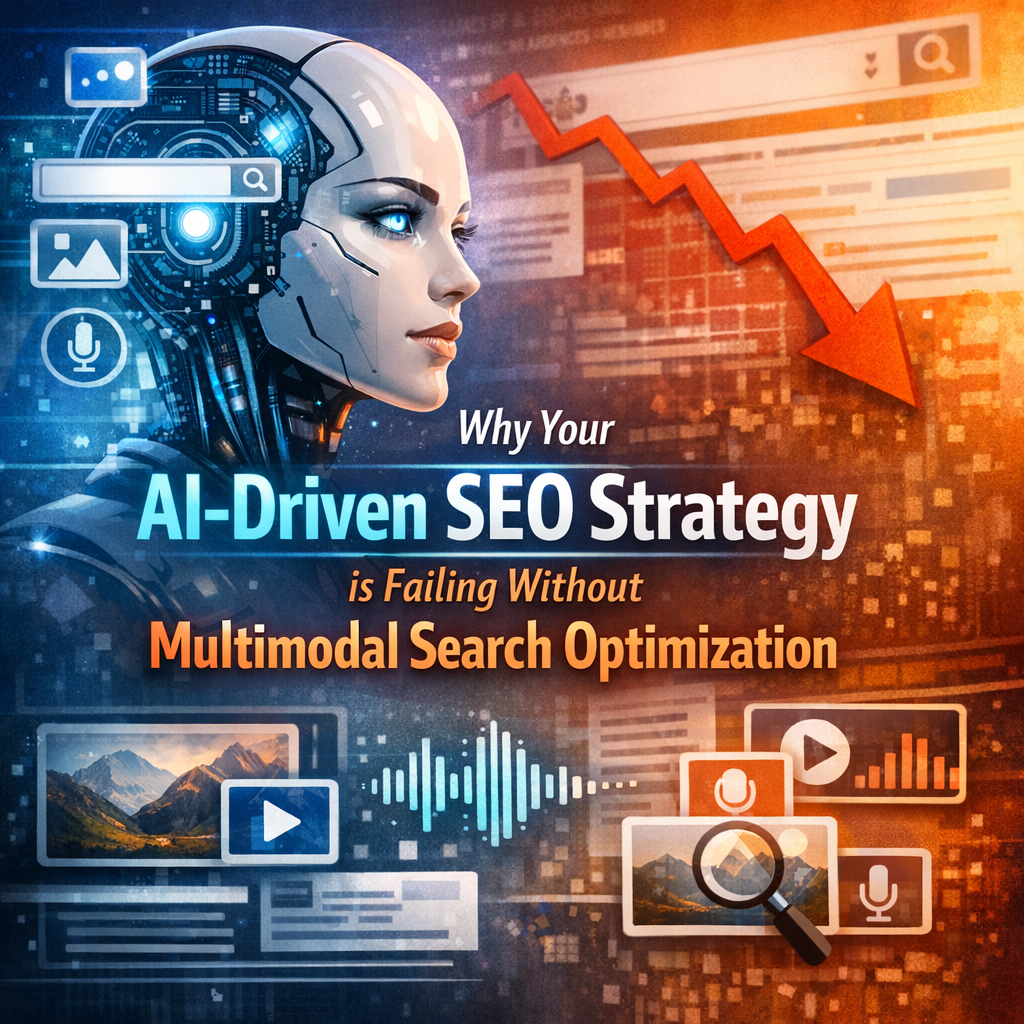
Harnessing AI for Advanced Marketing Strategies: The C-Suite’s Guide to SEO Innovation
Introduction:
In today’s rapidly evolving digital landscape, Artificial Intelligence (AI) significantly impacts marketing and search engine optimization (SEO). For C-suite executives, understanding AI’s transformative potential is crucial for maintaining a competitive edge. AI’s ability to analyze vast amounts of data at unparalleled speeds enables marketers to gain insights previously unattainable, allowing for highly personalized marketing strategies that cater to individual consumer preferences and behaviors. Moreover, technologies like machine learning and natural language processing enhance SEO strategies by automating routine tasks, predicting trends, and optimizing content for improved search engine rankings.
The integration of AI into marketing and SEO is not only about automation but also about augmentation, using AI to enhance human creativity and decision-making. AI helps marketers create targeted content by analyzing audience demographics, online behavior, and social media interactions. This approach leads to more engaged audiences and ultimately a higher return on investment. Additionally, AI-driven tools can identify micro-trends, enabling marketers to swiftly capitalize on emerging opportunities.
For the C-suite, the challenge is to navigate these complex technologies and integrate them into existing marketing frameworks. Successful implementation requires a strategic approach with executives understanding both the capabilities and limitations of AI tools. As AI evolves, its role in SEO and marketing strategy will grow, making it essential for future-proofing any organization’s digital marketing efforts. Understanding AI technology’s intricacies and its impact on SEO is not just advantageous—it’s essential.
Features:
Recent professional and academic studies highlight AI’s profound impact on SEO and marketing. A study by [McKinsey & Company](https://www.mckinsey.com) found that companies implementing AI in marketing strategies see up to 15% efficiency improvements and a 30% reduction in customer acquisition costs. The study emphasizes AI’s role in optimizing the customer journey by analyzing consumer data to predict purchasing behaviors and preferences.
Research from the [Massachusetts Institute of Technology (MIT)](https://sloanreview.mit.edu) highlights AI’s capabilities in content optimization. The study shows how AI tools, through natural language processing, can analyze and synthesize large datasets to determine effective keywords and phrases that align with consumer search patterns. This ability refines SEO strategies, enabling businesses to focus on content that ranks higher on search engines, increasing visibility and engagement.
Moreover, AI’s influence extends to voice search, which is rapidly gaining popularity. [Juniper Research](https://www.juniperresearch.com) projects that 55% of households will own a smart speaker by 2024, emphasizing the need for voice-optimized content. AI processes voice queries to deliver more accurate search results, providing marketers new avenues to reach audiences.
These studies underline that leveraging AI in marketing and SEO isn’t about replacing human insight but augmenting it. AI allows for dynamic content creation, real-time trend analysis, and audience-specific messaging that enhance engagement and conversion rates. Furthermore, AI’s predictive algorithms can simulate various marketing scenarios, aiding executives in resource allocation and informed strategic decision-making.
Conclusion:
The integration of AI into marketing strategies and SEO transforms how companies approach digital engagement. For C-suite executives, embracing AI means more than adopting new technology; it’s about harnessing its potential to drive innovative strategies, improve operational efficiencies, and stay competitive. By understanding and leveraging AI’s capabilities, businesses can position themselves for sustained growth and success.
Summary:
In the ever-evolving digital landscape, integrating AI into marketing and SEO is crucial for gaining a competitive edge. AI enables the creation of personalized marketing strategies by analyzing vast data quickly, enhancing SEO with tools like machine learning and natural language processing. Studies highlight AI’s role in optimizing consumer journeys, content, and voice search. For C-suite executives, the challenge is strategically integrating AI into existing frameworks. Embracing AI involves leveraging its capabilities to drive innovation, improve efficiency, and ensure future growth and success.
References:
– [McKinsey & Company: Artificial Intelligence in Business: Adoption, Impact, and Strategies](https://www.mckinsey.com)
– [MIT Sloan Management Review: The Impact of AI on SEO Strategies](https://sloanreview.mit.edu)
– [Juniper Research: Smart Speakers and Voice Assistants Market Report](https://www.juniperresearch.com)

Dominic E. is a passionate filmmaker navigating the exciting intersection of art and science. By day, he delves into the complexities of the human body as a full-time medical writer, meticulously translating intricate medical concepts into accessible and engaging narratives. By night, he explores the boundless realm of cinematic storytelling, crafting narratives that evoke emotion and challenge perspectives.
Film Student and Full-time Medical Writer for ContentVendor.com