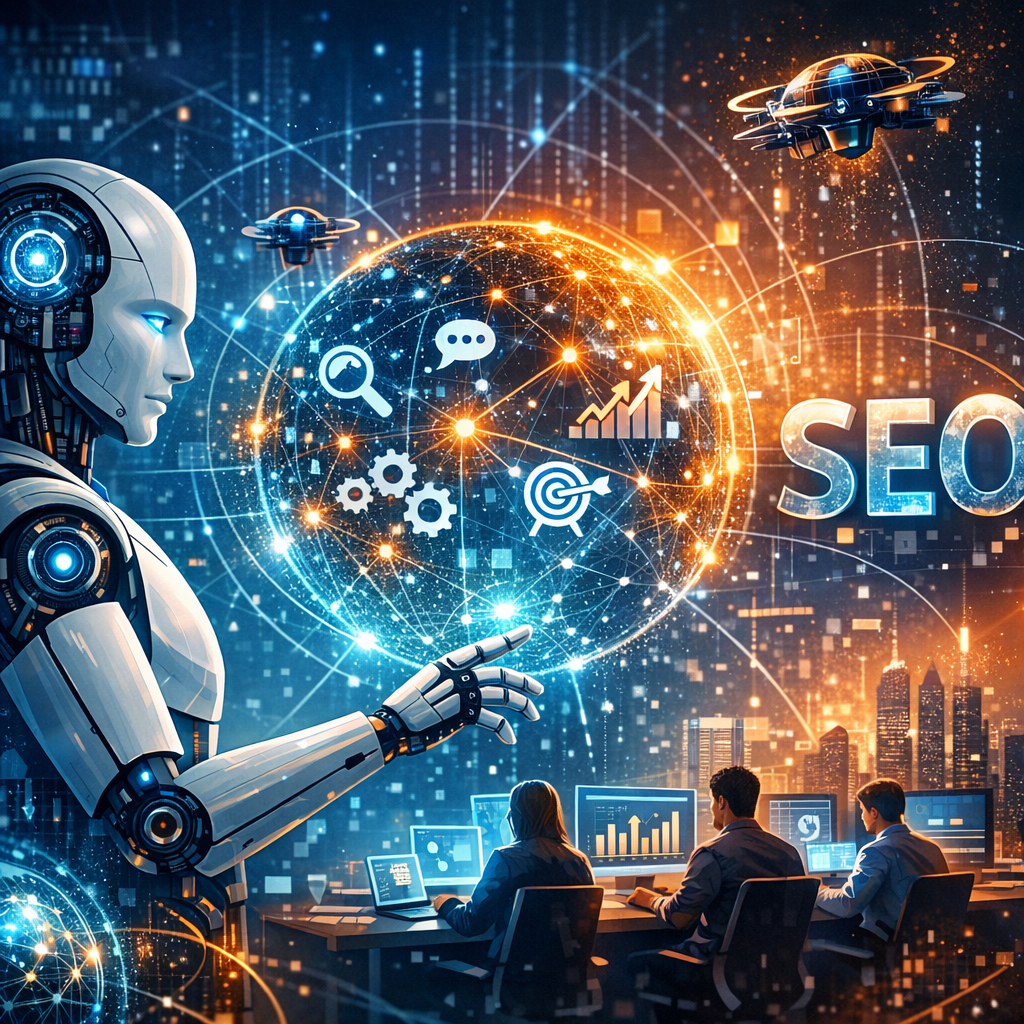
Revolutionizing SEO Strategies: Harnessing AI and Machine Learning for Unprecedented Growth
Introduction
In the rapidly evolving landscape of digital marketing, C-suite marketing and SEO professionals face challenges that demand continuous adaptation and innovation. The emergence of Artificial Intelligence (AI) and Machine Learning (ML) provides transformative opportunities for organizations to enhance their SEO strategies, boost market engagement, and improve customer experience. Understanding and integrating these technologies is crucial to maintaining a competitive edge.
AI and ML are reshaping traditional SEO practices by offering automation, predictive analysis, and enhanced personalization. Previously, SEO focused on optimizing keywords, improving meta tags, and building backlinks. Now, the core paradigm has shifted to a complex ecosystem where AI-driven algorithms define search engine rankings. An example is Google’s RankBrain, which uses AI to understand user intent, thereby delivering more accurate search results and refining user experience.
One primary advantage of integrating AI into SEO strategies is automation. Routine tasks such as keyword research, data analysis, and performance tracking can be handled more efficiently, allowing professionals to focus on strategic planning. AI-powered tools analyze vast data amounts to identify trends, predict outcomes, and suggest optimization strategies that align with user behavior patterns.
Moreover, personalization is taking the front stage with AI-enabled SEO strategies. By analyzing user data, AI systems can curate content that resonates with individual preferences, increasing engagement and conversion rates. For instance, AI-driven solutions determine the appropriate content format—whether video, blog post, or infographic—that will likely appeal to a specific audience segment, maximizing return on investment.
As digital ecosystems grow more complex, the importance of employing advanced technologies to optimize these environments also increases. AI and ML offer pathways to unlocking deep insights and creating personalized experiences that engage users like never before, leading to increased customer satisfaction and brand loyalty.
Features
The impact of AI and ML on SEO extends beyond automation and personalization to encompass predictive analytics, which allow marketers to anticipate market trends and consumer behavior. Studies such as those from [McKinsey & Company](https://www.mckinsey.com/) highlight that predictive analytics powered by AI can increase marketing efficiency by 10-20%. Predictive tools analyze historical data and external trends to forecast future behavior, enabling marketers to make informed decisions and refine their strategies precisely.
A key feature of AI in SEO is its ability to optimize for voice search, which is becoming mainstream with the proliferation of smart devices. According to research by [ComScore](https://www.comscore.com/), 50% of all searches were predicted to be voice-based by 2020. AI technology aids in understanding natural language processing (NLP), allowing search engines to interpret voice queries more accurately. This evolution requires SEO professionals to shift their focus from short-tail keywords to long-tail conversational phrases that better align with voice search patterns.
Furthermore, semantic search has been revolutionized by AI. Google’s AI techniques, particularly through its [Natural Language Processing API](https://cloud.google.com/natural-language/docs), enhance how search engines interpret context and user intent beyond simple keyword matching. This demands that content creators prioritize semantic relevance and user-centric content to improve visibility and engagement.
By incorporating AI-driven content creation tools, marketers can produce high-quality, relevant content consistently and efficiently. These tools assess trending topics, recommend keywords, and even generate drafts, thus saving time and resources while maintaining a competitive edge in content marketing.
Conclusion
The integration of AI and ML into SEO strategy represents a pivotal shift from traditional methods to data-driven decision-making. This transformation automates complex processes while personalizing and predicting user experiences in previously unimaginable ways. For C-suite executives and SEO professionals focused on growth, adapting to these technologies offers a dynamic advantage in capturing market opportunities and redefining customer relations. As AI evolves, staying ahead of these trends will be essential to maintaining relevance and achieving long-term success.
Concise Summary
Incorporating AI and ML into SEO strategies marks a transformative shift from traditional practices to a more complex, data-driven approach. By enhancing automation, personalization, and predictive analysis, AI reshapes how businesses engage with users, optimize content, and anticipate market trends. Key advancements include AI’s role in improving voice search optimization and semantic search capabilities, allowing for more accurate interpretations of user intent. As digital marketing continues to evolve, embracing these technologies will be critical for organizations aiming to maintain a competitive edge and achieve sustained growth.
References
1. [McKinsey & Company](https://www.mckinsey.com/)
2. [ComScore](https://www.comscore.com/)
3. [Natural Language Processing API](https://cloud.google.com/natural-language/docs)

Dominic E. is a passionate filmmaker navigating the exciting intersection of art and science. By day, he delves into the complexities of the human body as a full-time medical writer, meticulously translating intricate medical concepts into accessible and engaging narratives. By night, he explores the boundless realm of cinematic storytelling, crafting narratives that evoke emotion and challenge perspectives.
Film Student and Full-time Medical Writer for ContentVendor.com