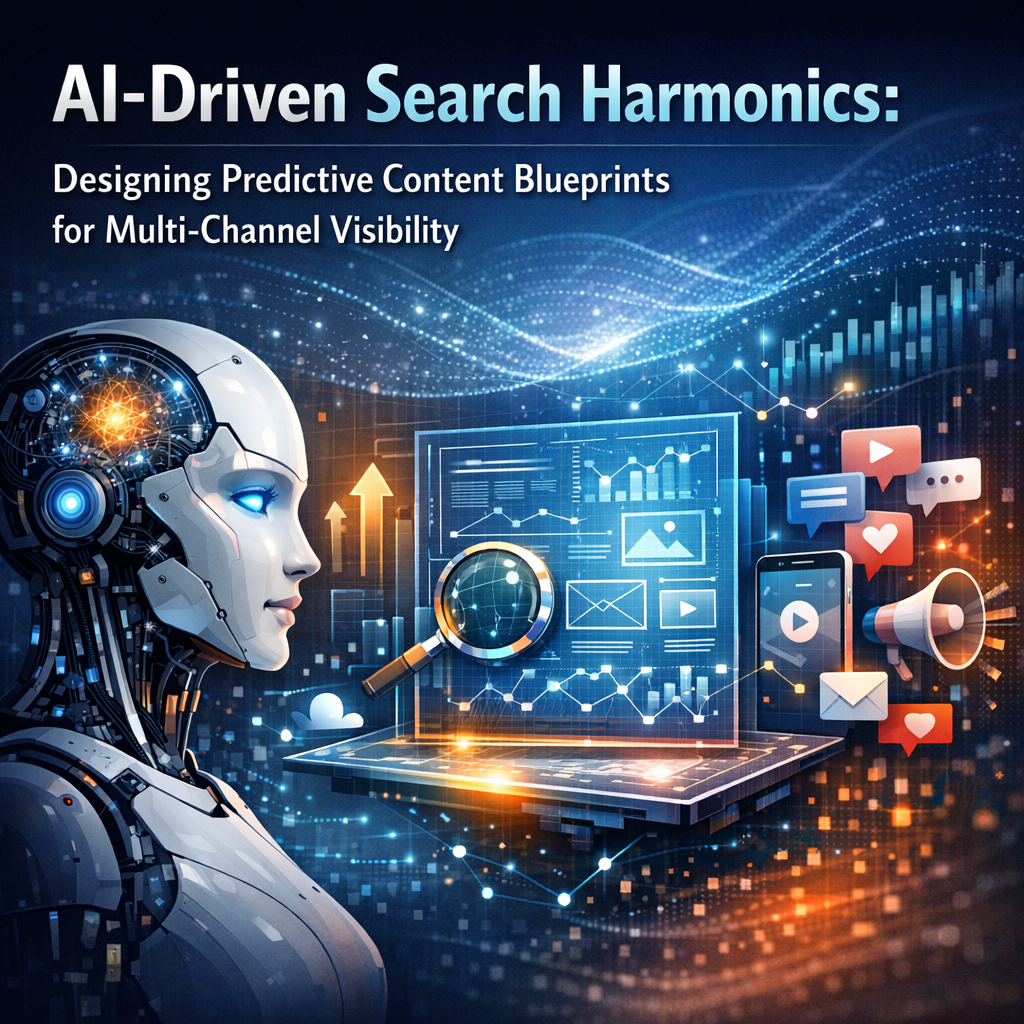
The Future of SEO: How Artificial Intelligence is Transforming Digital Marketing
Introduction
In the rapidly evolving landscape of digital marketing, the integration of Artificial Intelligence (AI) in Search Engine Optimization (SEO) is a game-changer, especially for C-suite professionals responsible for steering their companies towards success. Gone are the days when SEO was a straightforward application of keywords to improve website visibility. Today, AI-driven SEO strategies offer transformative potential that extends far beyond keyword optimization, influencing content strategy, audience targeting, and data analytics.
Artificial Intelligence in SEO harnesses machine learning algorithms, natural language processing, and data analytics to enhance search engine insights and efficiency. AI tools analyze massive datasets to reveal patterns and trends that were previously inaccessible to human marketers. This information can drive highly targeted marketing strategies and facilitate personalized customer experiences like never before. The importance of AI in SEO is underscored by search engines like Google adopting AI algorithms. Google’s AI algorithm, BERT (Bidirectional Encoder Representations from Transformers), changes how search queries are interpreted, focusing on context and intent rather than individual keywords. For executives, adapting to these changes is crucial to staying competitive.
Moreover, AI contributes significantly to enhancing content quality. Through tools like Predictive Technology, marketers can anticipate trends, optimize content creation, and streamline workflows. AI-driven SEO can automatically generate content suggestions, identify trending topics, and even perform competitor analysis. Consequently, businesses can create content that aligns more closely with their audience’s preferences, boosting engagement and conversion rates.
As the digital marketing sphere becomes increasingly data-driven, leveraging AI’s potential isn’t merely a competitive advantage; it’s a necessity. Executives must understand how AI impacts SEO to align their strategies accordingly. The capacity to analyze data in real-time, automate tasks, and improve the accuracy of marketing campaigns allows businesses to focus more on strategic decisions and less on mundane tasks.
Features
The impact of AI on SEO isn’t just theoretical; several studies and professional insights highlight its transformative power. For example, a [study by McKinsey & Company](https://www.mckinsey.com/featured-insights/artificial-intelligence/the-state-of-ai-in-2020) indicates that companies integrating AI into their marketing strategies can achieve productivity gains of up to 40%. These gains arise from AI’s ability to automate repetitive tasks, analyze market trends, and facilitate real-time decision-making. For C-suite professionals, this means more informed and effective strategic planning.
Professional insights also emphasize the role of AI in enhancing customer experience. A recent [Gartner report](https://www.gartner.com/en/documents/3984618) suggests that by 2025, companies utilizing AI in their SEO strategies could see a 15% increase in customer satisfaction. This improvement is attributed to AI’s ability to deliver more personalized content and interactions, which resonate with consumers’ evolving expectations. By using AI-driven insights, companies can refine their SEO strategies to better anticipate customer needs and preferences, driving greater loyalty and retention.
In the realm of medical studies, AI has demonstrated significant potential in optimizing healthcare-related content. A publication in the [Journal of Medical Internet Research](https://www.jmir.org/2020/6/e19423/) highlights how AI can enhance the accuracy of health-related information by cross-referencing vast datasets from medical publications and user interactions. For medical marketing executives, this means AI-driven insights can help craft content that is both accurate and accessible, thus building trust with their audience and fulfilling critical informational needs.
Moreover, AI’s predictive capabilities offer unprecedented advantages in SEO. Tools powered by machine learning can analyze historical data and predict future trends, enabling marketers to craft proactive strategies. By forecasting search trends and consumer behavior, businesses can optimize their content and SEO efforts pre-emptively, ensuring that they stay ahead of the competition. This proactive approach is particularly invaluable for C-suite executives who are tasked with steering their organization through the unpredictable tides of digital marketing.
Conclusion
AI’s integration into SEO is redefining digital marketing, offering unparalleled opportunities for businesses to optimize their strategies with greater precision and efficiency. As AI technologies continue to evolve, C-suite professionals must stay informed and adaptive, leveraging AI’s capabilities to enhance their organization’s competitive edge. The future of SEO is not just about adaptation; it’s about anticipating change and positioning your business to lead in a new digital era.
References
1. [McKinsey & Company: The state of AI in 2020](https://www.mckinsey.com/featured-insights/artificial-intelligence/the-state-of-ai-in-2020)
2. [Gartner: Predicts 2022: Marketing Seeks Relevance](https://www.gartner.com/en/documents/3984618)
3. [Journal of Medical Internet Research: AI-Powered Healthcare-Related Content Optimization](https://www.jmir.org/2020/6/e19423/)
Concise Summary
In today’s digital marketing sphere, the integration of Artificial Intelligence (AI) into Search Engine Optimization (SEO) is transforming traditional tactics. AI-driven SEO strategies now offer significant advantages, like improved content quality, enhanced customer experiences, and targeted marketing strategies. These AI tools leverage machine learning and data analytics for better insights. By 2025, companies using AI in SEO could see a 15% rise in customer satisfaction. For C-suite executives, adopting AI is crucial for maintaining competitiveness, as it facilitates strategic planning and optimizes consumer engagement and retention.

Dominic E. is a passionate filmmaker navigating the exciting intersection of art and science. By day, he delves into the complexities of the human body as a full-time medical writer, meticulously translating intricate medical concepts into accessible and engaging narratives. By night, he explores the boundless realm of cinematic storytelling, crafting narratives that evoke emotion and challenge perspectives.
Film Student and Full-time Medical Writer for ContentVendor.com